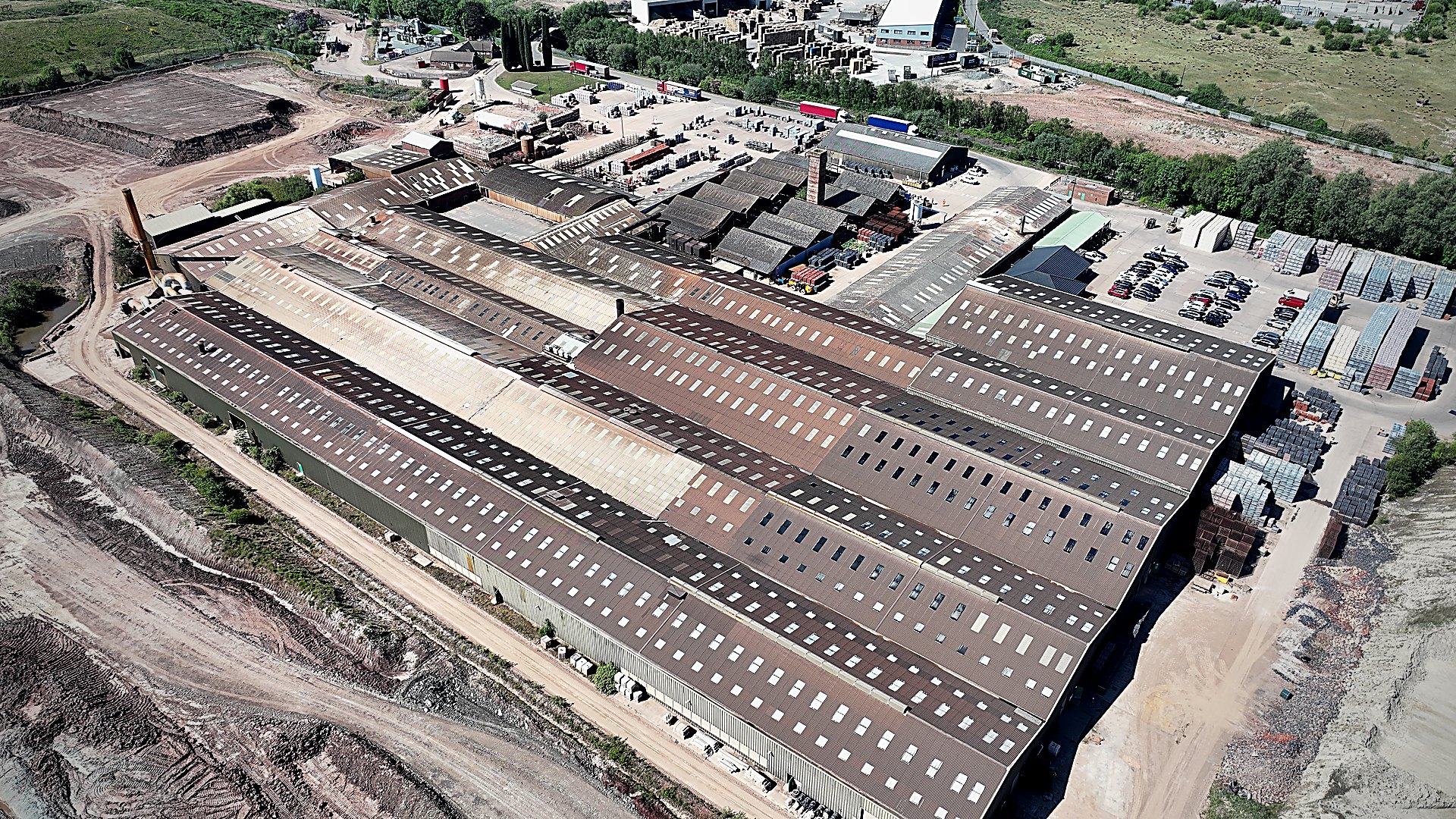
A certification scheme prescribes what must be done inside its own scope. Outside that scope the obligation does not disappear, but the prescription does. This paper sets out where the boundary sits for rooftop photovoltaics, what continues to apply beyond it, and why the engineering question is unchanged on either side.
06Paper numberOpenNo registrationQuotableAttribution required6 minRead time
50
kWp DC. The scope ceiling of the MCS standard for solar photovoltaic installations.
0
PV-specific scheme requirements above it. Building Regulations continue to apply to the alteration.
1
Engineering question, unchanged on both sides: can the structure carry it?
01 · The boundary
A scope ceiling is not a safety threshold
MCS MIS 3002 sets requirements for solar photovoltaic installations, including requirements around the structural check, and its scope ends at 50kWp DC. That figure is a definition of what the scheme covers. It is not a statement that structures above it need less scrutiny.
The shape of itBelow 50kWp the process is prescribed and auditable. Above 50kWp the obligation remains but the prescription does not — and the arrays above the ceiling sit on the widest-span, oldest and most heavily altered roofs in the country.
What the standard actually requires, precisely
Within scope, the baseline is that the structural check is carried out by a suitably competent person. The standard additionally names specific circumstances in which a qualified structural engineer is required rather than merely advisable. It is worth being exact about this, because the standard is frequently reported both more loosely and more strictly than it reads.
And what happens above the ceiling
The scheme does not apply. Building Regulations continue to apply to the alteration exactly as they would to any other alteration of an existing building, and the duties of the parties involved are unchanged. What is absent is a prescribed check with a defined competence attached to it.
Figure 1
Where the prescription stops
Schematic, not data. MCS MIS 3002 applies up to 50 kWp. Above that ceiling the prescription ends, which is frequently read as the requirement ending. It does not: the engineering question is identical on both sides of the line, and only the route to answering it changes.
02 · Why it matters more than it sounds
The buildings either side of the line are not comparable
Scale changes which check governs
On a small array the governing consideration is frequently local: a fixing, a purlin, a single member. On a large array across a wide-span roof the governing consideration is more often global — frame behaviour, deflection under the combined case, and uplift across edge and corner zones that grow with the roof plane. The larger installation is not simply more of the same problem.
And the stock is older and more altered
Large-span industrial roofs are disproportionately pre-2000, disproportionately undocumented, and disproportionately carrying decades of accumulated plant. The building most likely to need a careful appraisal is the one least likely to be covered by a prescribed one.
The consequence is a specification vacuum, not a regulatory one
Nothing is unregulated. But where nothing is prescribed, what gets done depends entirely on what the buyer asks for — and buyers above the threshold frequently assume the same process applies as below it.
03 · What to require above the ceiling
The absence of a prescription is not an absence of a standard
Require the standards explicitly
Actions combined under BS EN 1990, with imposed actions to BS EN 1991-1-1, snow to BS EN 1991-1-3 and wind to BS EN 1991-1-4 with the UK National Annex, and array uplift derived using BRE Digest 489. These apply regardless of scheme scope, but above the ceiling nobody will require them on your behalf.
Require a named signatory
A qualified structural engineer, named and dated. Where no scheme defines competence, the instruction has to.
Require the governing case to be identified
Which combination governs and by what margin. On a large roof this is the difference between a report that has been produced and a report that has been thought about.
And require it early
Above the threshold the array layout is usually fixed before anyone asks a structural question, because no gate forced the question earlier. Layout is the cheapest variable to change and the last one anybody wants to revisit.
How Solar Surveys approaches this
We work on both sides of the ceiling, to the same standard
The 50 kWp boundary is where a lot of projects quietly lose their structural route, because the prescription stops and nothing obvious replaces it. Solar Surveys covers both sides of that line, and applies the same engineering to each.
01
Below the ceiling: evidence that stands up
Structural evidence produced to satisfy the competent-person requirement, prepared and signed by a structural engineer. It is our standard that a qualified engineer signs the outcome, and we apply it whether or not a scheme compels it.
02
Above the ceiling: a full appraisal
Where no prescribed route applies, the requirement to know the roof can carry the load does not go away. A full structural appraisal against the Eurocodes answers it, and it is the same work we would have done below the threshold.
03
One provider either side of the line
Estates rarely sort themselves neatly around a kilowatt figure. Being able to place every roof in a portfolio with one engineering team means the standard of evidence does not change depending on which side of 50 kWp a building happens to land.
Above the ceiling the prescription disappears. The requirement to know the roof can carry the load does not.
Solar Surveys Ltd · structural surveys and roof condition assessments for commercial solar PV across the UK · £5m professional indemnity cover in force.
04 · Basis and limitations
How this paper was prepared
Basis
Analysis of scheme scope and the standards applying to alterations of existing structures. No survey statistics are reported.
Standards referenced
BS EN 1990; BS EN 1991-1-1; BS EN 1991-1-3; BS EN 1991-1-4 with the UK National Annex; BRE Digest 489; MCS MIS 3002 Issue 6.0.
Scope
Rooftop photovoltaic installations on commercial and industrial buildings in the United Kingdom.
Not a claim that large arrays are unregulated
They are not. Building Regulations apply to the alteration. The observation is narrower: no PV-specific scheme requirement applies above the scope ceiling.
Not a statement of any scheme position
Where a scheme, certification body or regulator states a requirement, that statement governs and should be read directly.
No proportions reported
How often installations above the threshold receive a structural appraisal is not published here, for want of a stated denominator.
05 · Citation
Cite this paper
Suggested citation
Raihan, S. (2026) Where the Prescribed Check Stops: Scheme Scope and Structural Obligation. Solar Surveys Research, Paper 05. Solar Surveys Ltd. Available at: https://solarsurveys.co.uk/research/where-the-prescribed-check-stops