Order a Desktop Structural Report Free Structural Pre-Check Tool
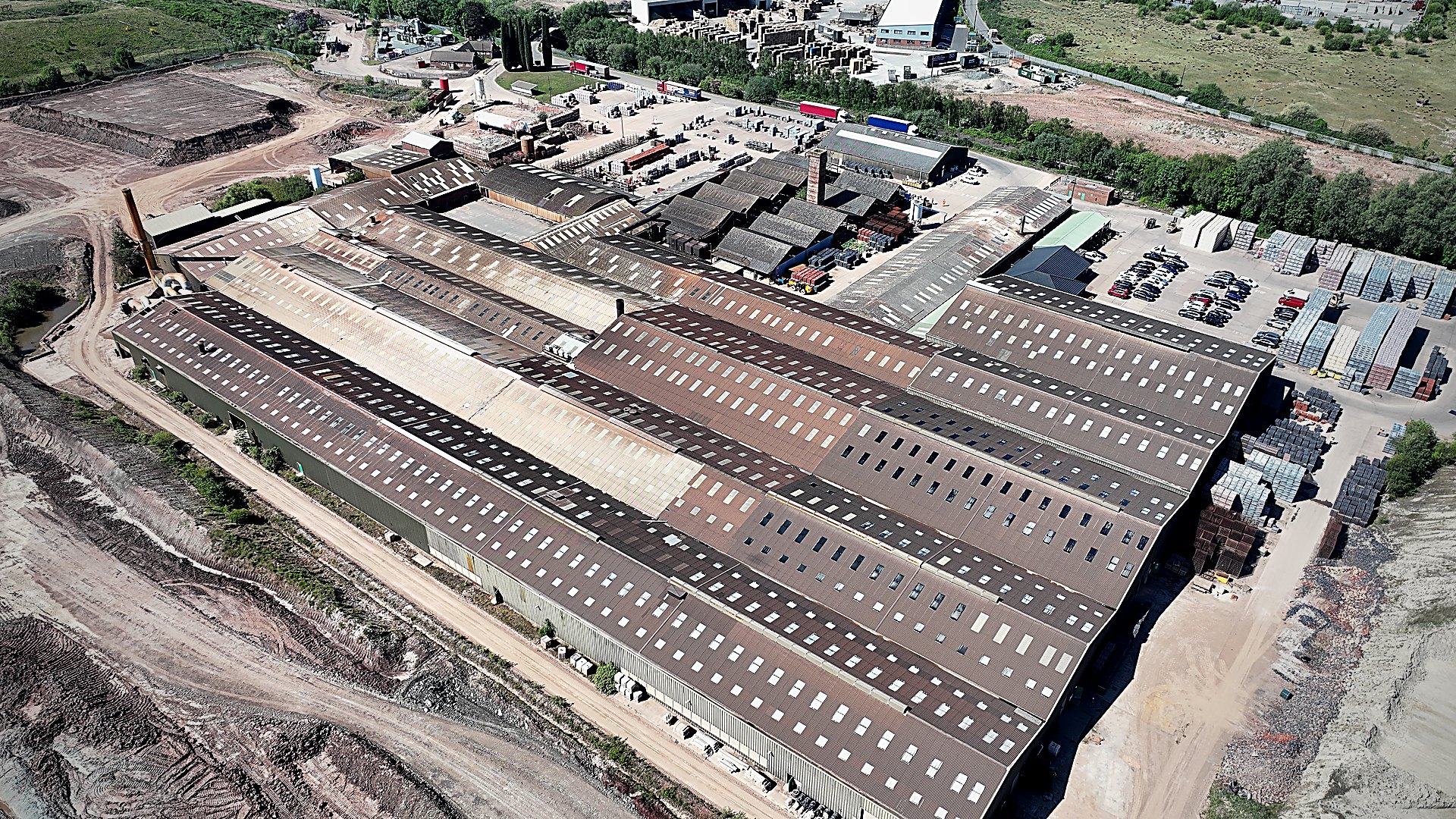
Aerial view of a UK commercial industrial estate

Research · Paper 01 · August 2026

What a structural survey establishes

The phrase carries no protected meaning in the United Kingdom. Anyone may use it, and it is used to describe several different pieces of work that answer materially different questions. This paper sets out what each one establishes, what it does not, and how to specify an appraisal when load is being added to a roof.

01Paper number OpenNo registration CC BY 4.0Reuse with attribution
01

Phrase in common use across the industry. “Structural survey” is not a protected term and carries no single defined scope.

04

Distinct pieces of work commonly described by that one phrase, each answering a different question about a building.

01

Question that matters when load is added: can the existing structure carry it, and on what basis is that concluded?

01 · The problem

One phrase, several different pieces of work

A buyer asking for a structural survey and a supplier quoting for one are frequently describing different work. Neither party is being dishonest. The phrase simply has no fixed meaning, and the market has attached it to at least four distinct products.

What is protected, and what is notIndividual professional titles are protected. Chartered status is regulated by the relevant institution, and the RICS designations are held by members of that body. The phrase “structural survey” is not protected, is not defined in statute, and may be used by anyone to describe anything.

The consequence is a specification failure, not a competence failure

Most disputes we see over the adequacy of a survey are not about whether the work was carried out properly. They are about whether the work carried out was the work the buyer believed they had commissioned. A visual condition inspection performed correctly is still the wrong instrument for establishing whether a roof can carry an additional load, and a report that answers the first question cannot be criticised for failing to answer the second if the second was never asked.
It surfaces at the point of reliance

The gap is rarely noticed at instruction. It is noticed when a third party — a lender, an insurer, a certification body or a purchaser’s adviser — asks the report to support a conclusion it was never scoped to reach. At that point the building has usually already been committed to.

02 · Comparison

What each form of survey actually establishes

The table below is descriptive rather than prescriptive. Scopes vary between practices, and any of these may be extended by agreement. It is offered so that a buyer can identify which question they are asking.

Table 1. Common forms of survey and the questions each is scoped to answer.
Form of work Typically establishes Does not establish Usually produced by
Condition inspection The present visible condition of the fabric, defects, and maintenance requirements Load capacity, or the effect of any added load A surveyor
Building survey
RICS Home Survey Level 3 and equivalents
Condition in detail, defects, and their likely cause and consequence Numerical capacity. It is a condition instrument, not a calculation A chartered building surveyor
Roof condition assessment The condition of the covering, fixings, flashings, rooflights and drainage Whether the structure beneath can carry more than it carries today A surveyor or a specialist inspector
Structural appraisal for added load Whether the existing structure can carry a defined new load, to the Eurocodes, with a stated conclusion Anything outside the load case assessed, and anything not visible or recorded A structural engineer

The distinction that matters is the last column of row four. A condition instrument records what is there. An appraisal for added load performs a calculation against a defined load case and reaches a conclusion that can be relied upon. Both are legitimate. They are not substitutes.

03 · Requirements

What an appraisal for added load has to contain

Where load is being added to an existing roof — an array, plant, screening, a safety system, a mezzanine — four things have to be present for the conclusion to be capable of being relied upon.

1. The structural arrangement, recorded rather than assumed

Member sizes, spans, support centres and the fixings, taken from the building as it stands. On a large share of commercial stock there is no original design information, and where drawings exist they frequently predate decades of alteration. An appraisal that assumes an arrangement is assessing a building that may not exist.

2. A defined load case, not a weight

The added load is rarely the governing consideration. Actions are combined under BS EN 1990, with imposed actions to BS EN 1991-1-1, snow to BS EN 1991-1-3, and wind to BS EN 1991-1-4 with the UK National Annex. For a rooftop array, uplift derived using BRE Digest 489 frequently governs rather than dead load — which is why a calculation based on panel weight alone answers the wrong question.

3. A conclusion, stated plainly

Adequate, adequate subject to defined changes, or not adequate — and where not adequate, what would be required to make it so. A report that describes without concluding transfers the decision back to a party who is not qualified to make it.

4. A named signatory and a date

Signed by a qualified structural engineer, dated, and identifying what was and was not inspected. Reliance depends on somebody having taken responsibility for the conclusion. An unsigned report is a document, not an appraisal.

Interior structural arrangement of a UK commercial roof recorded during survey

04 · Specifying it

How to ask for the right thing

Because the phrase is not defined, the instruction has to carry the definition. Four lines are sufficient, and they remove almost all of the ambiguity that causes disputes later.

State the load being added. Its nature, its magnitude, and where on the roof it will sit. An appraisal cannot be carried out against an undefined load.

State the standards required. The Eurocodes and their UK National Annexes, and where applicable BRE Digest 489 for array uplift.

State who must sign it. A qualified structural engineer, named, with the report dated.

State who will rely on it. If a lender, insurer, certification body or purchaser will read the report, say so at instruction rather than after issue.

A specification of four lines converts an ambiguous phrase into a defined piece of work, and it costs nothing.

05 · Where certification schemes sit

A scheme requirement is a floor, not a definition

Certification schemes prescribe requirements within their own scope. They do not define what a structural survey is, and their scope is narrower than the range of situations in which load is added to a roof.

The scope boundary is the point most often missed

Within the Microgeneration Certification Scheme, MIS 3002 sets requirements for solar photovoltaic installations and its scope stops at 50kWp DC. Above that threshold the scheme does not apply. Building Regulations continue to apply to the alteration, as they would to any alteration, but no scheme-level prescribed check applies. The engineering question is unchanged either side of the boundary; only the prescribed process changes.

And the same applies to loads that are not photovoltaic at all

Plant, condensers, screening, mansafe systems, green roofs, signage and mezzanines all add load to structures that were not designed for them, and none of them falls within a solar certification scheme. The appraisal required is the same appraisal. Only the reason for it differs.

06 · Basis and limitations

How this paper was prepared

Basis
This paper is an analysis of published standards, professional practice and the terms in common commercial use. It is not derived from survey data and reports no statistics.
Standards referenced
BS EN 1990; BS EN 1991-1-1; BS EN 1991-1-3; BS EN 1991-1-4 with the UK National Annex; BRE Digest 489; MCS MIS 3002 Issue 6.0.
Scope
Commercial and industrial buildings in the United Kingdom where load is being added to an existing roof structure.
What this paper is not
It is not legal advice, and it is not a statement of any professional body’s position. Where a scheme, insurer or regulator sets a specific requirement, that requirement governs.
Scopes vary
Table 1 describes forms of work as commonly encountered. Any practice may scope its work differently, and any of these instruments may be extended by agreement.
No comparative claim
Nothing here is a statement about the competence of any individual or firm. The subject is the specification of work, not the people who carry it out.

07 · Citation

Cite this paper

Suggested citation

Raihan, S. (2026) What a Structural Survey Establishes, and What It Does Not. Solar Surveys Research, Paper 01. Solar Surveys Ltd. Available at: https://solarsurveys.co.uk/research/what-a-structural-survey-establishes

Published under Creative Commons Attribution 4.0. Reproduce, quote and build on this with attribution. Writing about it and want something clarified, or a point expanded? Ask. We would rather it was reported correctly than quickly.

Solar Surveys Research

Commission an appraisal

On-site structural surveys and roof condition assessments for commercial buildings across the UK, signed by a qualified structural engineer.