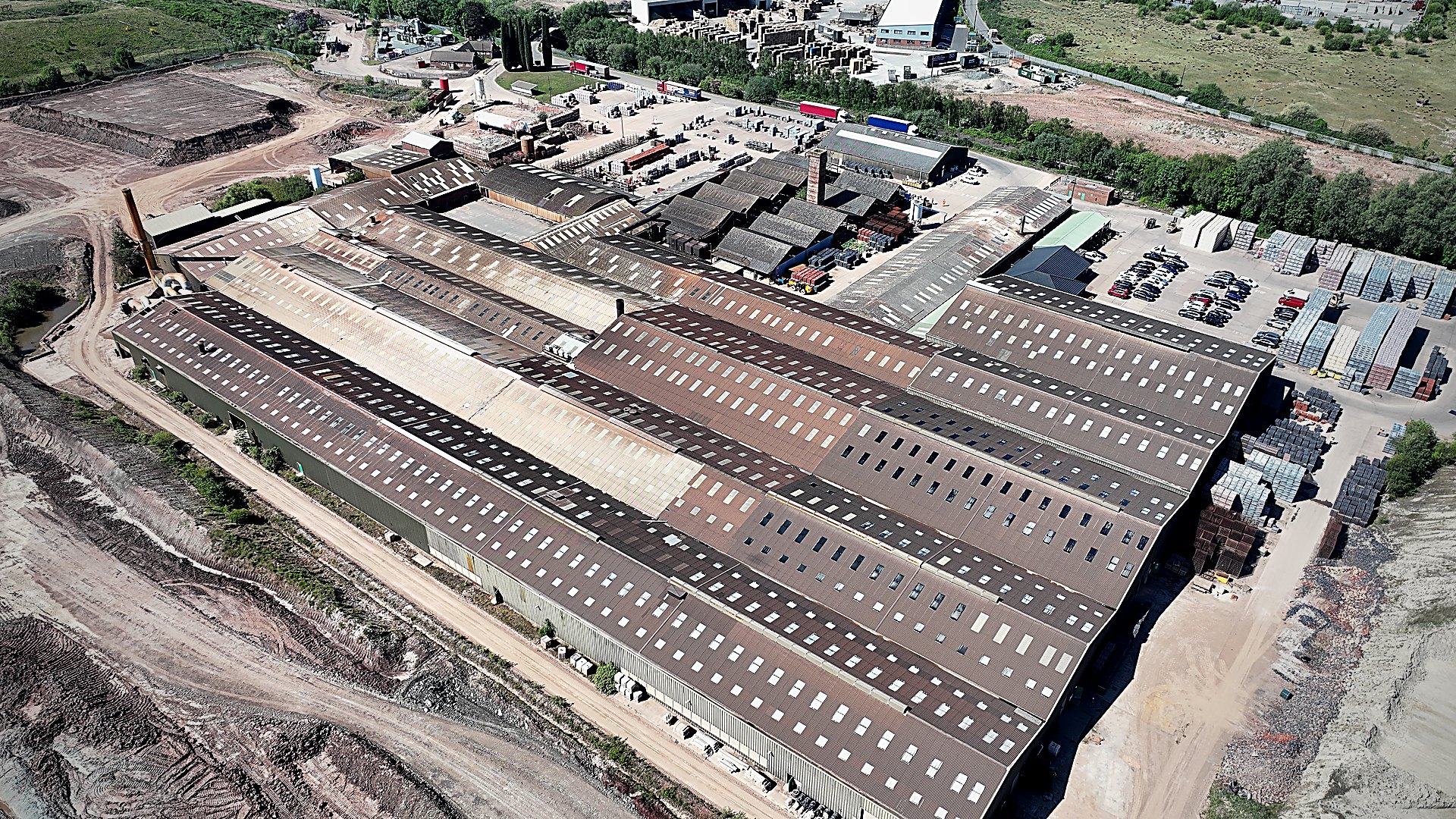
Across roofs where a condition assessment was carried out, 82% showed defects capable of affecting long-term waterproofing performance. That figure is not primarily a solar finding. It is a statement about the building stock, and it has a consequence for anything mounted on top of it.
03Paper numberOpenNo registrationQuotableAttribution required7 minRead time
82%
Of roofs where a condition assessment was carried out showed defects capable of affecting long-term waterproofing performance.
~90%
Of the 575-roof dataset had a condition assessment carried out, so the finding rests on the substantial majority of the sample.
2024–26
Period over which the roofs were assessed, across the United Kingdom.
01 · The finding
What counts as a defect here
The test applied is whether a defect or maintenance issue is capable of affecting long-term waterproofing performance. It is a functional test rather than a cosmetic one, and it is deliberately broad, because the things that let water into a commercial building are various and individually unremarkable.
Recorded under this testSurface weathering and deterioration of the covering · cracking · missing, cracked or degraded rooflights · vegetation growth · inadequate or failed weatherproofing detail · and general lack of maintenance. Each is recorded where present and where it bears on the ability of the roof to keep water out over its remaining life.
The breadth of the definition is the point, not a weakness in it
A narrower test — active leaks only, say — would produce a smaller and more dramatic-sounding number while describing something less useful. Roofs rarely fail suddenly. They accumulate small failures, each individually tolerable, until one of them stops being tolerable. A test that only counts the last one arrives too late to be of any use to an owner.
And no proportion by defect type is published
The dataset records whether the test was met. It does not carry a validated breakdown by defect category, so no such breakdown appears here. How much of the 82% is weathering as against rooflights as against vegetation is not something we can state, and stating it would be inventing precision the record does not hold.
Figure 1
The finding, and the sample it rests on
Measured. 82% of roofs where a condition assessment was carried out showed one or more defects capable of affecting long-term waterproofing performance. The denominator is the roofs actually assessed — approximately 90% of the 575-roof dataset — and is stated so the figure can be checked rather than taken on trust.
02 · The consequence
Whatever is mounted on the roof will probably outlive the covering
A roof covering has a remaining service life. So does an array, a set of plant, or a screening system. They are almost never installed at the same point in those two lives, and nobody reconciles them.
The mismatch is invisible until it is expensive
Put a twenty-five year asset on a covering with eight years left and a problem has been created that surfaces in year eight: the covering has to be replaced with the asset sitting on it. Somebody strips it, recovers the roof, and reinstates. That cost appears in no yield model, no lease and no power purchase agreement we have seen.
Which is why condition and capacity are different enquiries
A structural appraisal answers whether the roof can carry the load. A condition assessment answers how long the covering has left. A roof can pass the first and fail the second, and the second is the one that determines whether the installation was a good idea. Both questions have to be asked, and asking only the structural one is the more common error.
And the 82% says this is the normal case, not the exception
If most roofs assessed carry defects capable of affecting waterproofing performance over their remaining life, then the covering question is not a rare complication to be handled when it arises. It is a standing feature of the stock, and a process that does not ask it will get it wrong most of the time.
03 · What to do with it
Three questions, before anything is mounted
1. What is the remaining life of the covering?
Not its age, and not whether it is currently leaking. Its remaining life, stated as a judgement with the reasons behind it. This is the number that has to be compared against the design life of whatever is going on top.
2. If it is shorter, what is the plan?
There are three honest answers: recover the roof first, accept and price the future removal and reinstatement, or do not install. All three are legitimate. Discovering the question after commitment removes the first and makes the second considerably more expensive.
3. Who carries it?
Where a lease or an agreement runs twenty years and the covering has eight, the cost of removal and reinstatement falls somewhere. That allocation is a contractual question, but it is one nobody can answer without the first two.
How Solar Surveys approaches this
Both questions, one attendance, one engineering team
This finding is exactly why Solar Surveys does not sell a condition assessment and a structural survey as two separate errands. On a roof taking new load the two questions are inseparable, and answering them from two exercises that never met is how a mismatch survives all the way to year eight.
01
The covering, recorded from above
Sheet or membrane condition, fixings, flashings, upstands, rooflights, drainage behaviour, ponding and vegetation growth. No scaffold, no access platform, and nobody standing on a covering that may not bear them.
02
The structure, recorded from below
Members, spans, support centres and the fixing arrangement, measured from the building on the same visit rather than inferred from its age or from a drawing that no longer describes it.
03
Assessed together, by structural engineers
Both halves are assessed against the Eurocodes and their UK National Annexes, with array uplift to BRE Digest 489, and reported as one answer about one building rather than two documents a client has to reconcile.
A roof can pass the structural question and fail the covering question. We would rather tell you that before the layout is fixed than after the array is standing on it.
Solar Surveys Ltd · structural surveys and roof condition assessments for commercial solar PV across the UK · £5m professional indemnity cover in force.
04 · Basis and limitations
How this paper was prepared
Population
575 UK commercial rooftops assessed between 2024 and 2026, the same dataset published in full on the PV Structural Feasibility Dataset.
Denominator for the 82%
Roofs on which a roof condition assessment was carried out. That was approximately 90% of the 575, so the finding rests on the substantial majority of the dataset rather than on a small subset.
Test applied
Whether a defect or maintenance issue was present that is capable of affecting long-term waterproofing performance. Functional, not cosmetic.
Assessment
Condition recorded on attendance. Where a covering was fragile it was recorded from the air rather than walked, as set out in Paper 04.
Not a random sample of UK stock
These are buildings on which an assessment was commissioned, normally because solar was being considered. That is a population of commercial roofs being evaluated for investment, not a representative sample of every commercial roof in the country, and the figure should not be read as one.
The remaining ~10%
Where no condition assessment was carried out, the instruction was structural only. Those roofs are excluded from the denominator rather than counted as defect-free.
No breakdown by defect type
The record does not carry a validated split by category, so none is published. Nor is severity graded within the finding.
Proportions describe a population
82% characterises this dataset. It says nothing about any individual roof, which can only be established by assessing it.
05 · Citation
Cite this paper
Suggested citation
Raihan, S. (2026) The Condition of UK Commercial Roofs. Solar Surveys Research, Paper 03. Solar Surveys Ltd. Available at: https://solarsurveys.co.uk/research/the-condition-of-uk-commercial-roofs