Order a Desktop Structural Report Free Structural Pre-Check Tool
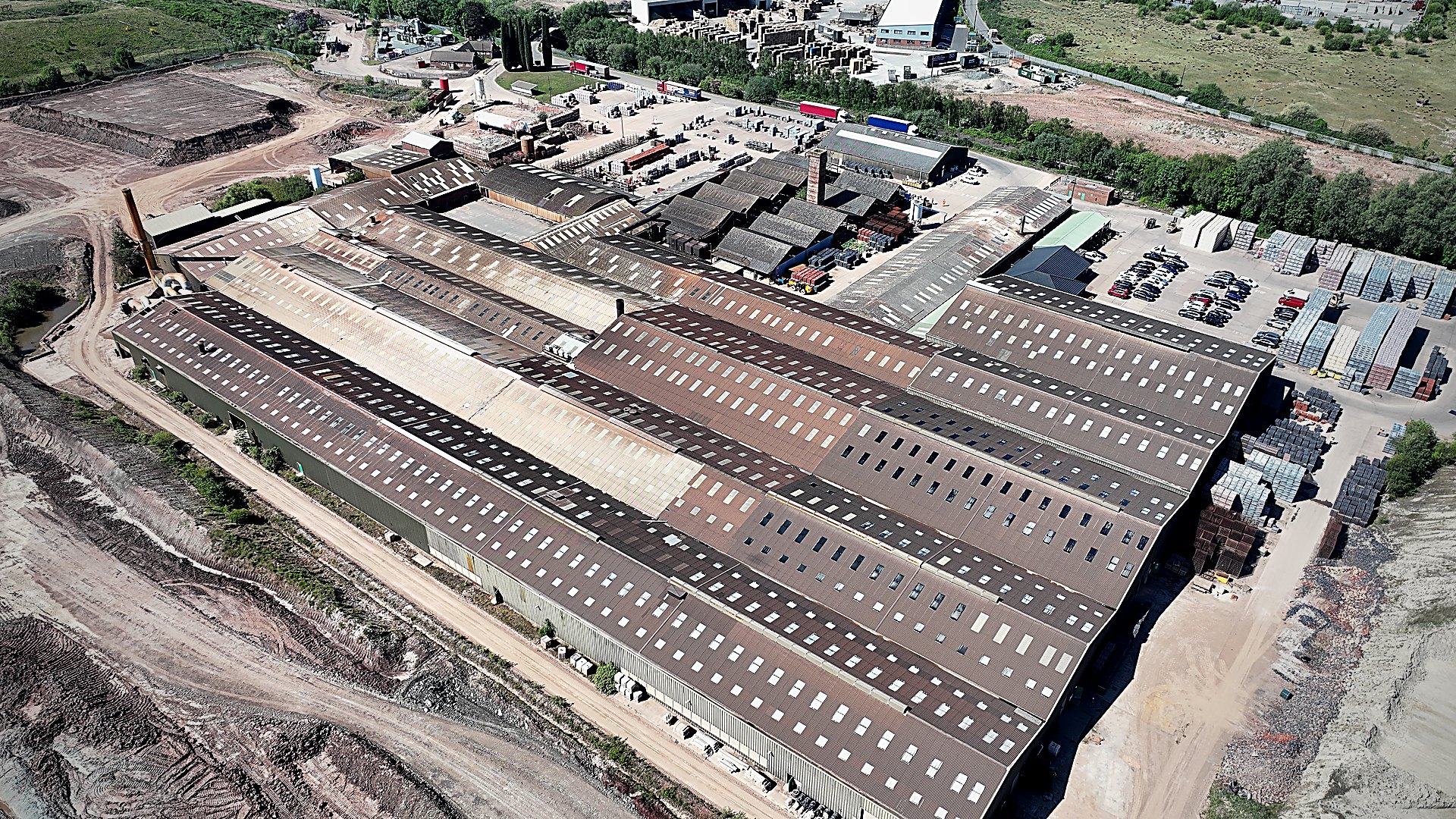
Aerial view of UK commercial roofs

Research · Paper 11 · August 2026

Ballast is a designed load, not a delivered quantity

On a ballasted flat roof the array is held down by weight rather than by penetrating fixings. That weight is not a product specification to be looked up. It is an output of a calculation about the specific roof, and where it lands on the structure matters as much as how much of it there is.

11Paper numberOpenNo registrationCC BY 4.0Reuse with attribution
01

Ballast resists uplift. Its quantity follows from the wind demand at that site, not from a catalogue.

02

It is permanent load the deck must carry, in the position it sits.

03

Two identical arrays on two identical roofs in different places require different ballast.

01 · The two questions

Enough to hold it down, and light enough to be carried

A ballasted system creates a requirement that pulls in opposite directions, and both directions have to be satisfied simultaneously on the same roof.

The uplift question

How much restraint does the array need? This follows from peak velocity pressure at the site, derived under BS EN 1991-1-4 and its UK National Annex with modification for terrain, altitude and distance to shoreline, and from the array-specific coefficients in BRE Digest 489. A more exposed site needs more ballast for the same array.

The capacity question

Can the deck carry it? Ballast is permanent dead load, and it is concentrated where the ballast trays sit rather than spread across the roof plane. The check is not whether the roof can carry the average, but whether it can carry it where it actually is.

And they can conflict

An exposed site needs more ballast; a weak deck can carry less. Where those two collide the answer is not more ballast, and it is not less. It is usually a different layout, a different mounting approach, or a mechanically fixed system.

02 · What goes wrong

Ballast treated as a specification rather than a result

A figure carried between projects

A quantity that worked on a previous roof is applied to this one. It has no validity here, because the wind demand and the deck are both different. This is the most common error and the least visible in the paperwork.

Uniform ballast across a non-uniform demand

Uplift is highest at edges and corners and lower in the field of the roof. A uniform arrangement is simultaneously too light where it matters and unnecessarily heavy where it does not, which loads the deck without buying restraint.

And no ballast schedule at instruction

An assessment cannot be completed without knowing the ballast arrangement, because that arrangement is a substantial part of the load being assessed. Where a proposal arrives without one, the appraisal stalls after the site visit rather than before it.

03 · What to require

Three things, at instruction

The ballast schedule, not just the mounting system

Position and mass, tray by tray or zone by zone. The product datasheet does not contain this, because it is a property of the design for this roof rather than of the product.

The site-specific wind derivation

Stated, so the basis of the ballast quantity is on the record and can be checked. A ballast figure without the derivation behind it cannot be verified by anyone.

And the distribution on the deck

Where the load lands, assessed against the structure beneath rather than averaged over the roof area. Averaging is what makes a ballasted array look lighter than it is.

04 · Basis and limitations

How this paper was prepared

Basis
Analysis of the standards governing wind actions and array restraint, and of assessment practice. No survey statistics are reported in this paper.
Standards referenced
BS EN 1990; BS EN 1991-1-1; BS EN 1991-1-3; BS EN 1991-1-4 with the UK National Annex; BRE Digest 489; MCS MIS 3002 Issue 6.0.
Scope
Ballasted, non-penetrating rooftop photovoltaic systems on commercial flat roofs in the United Kingdom.
No values are published
This paper states no ballast quantity, no wind pressure and no deck capacity. All are properties of a specific site and structure.
No proportions reported
How often ballast arrangements require revision is not published here, for want of a stated denominator.
Not a mounting system comparison
Nothing here evaluates or recommends any product or manufacturer.

05 · Citation

Cite this paper

Suggested citation

Raihan, S. (2026) Ballast Is a Designed Load, Not a Delivered Quantity. Solar Surveys Research, Paper 05. Solar Surveys Ltd. Available at: https://solarsurveys.co.uk/research/ballast-is-a-designed-load

Published under Creative Commons Attribution 4.0. Reproduce, quote and build on this with attribution. Writing about it and want something clarified, or a point expanded? Ask. We would rather it was reported correctly than quickly.
Solar Surveys Research

Commission an appraisal

On-site structural surveys and roof condition assessments for commercial buildings across the UK, signed by a qualified structural engineer.