Home / Case Studies / Stadium Roof Condition Survey
Case Study · Sport & Public Venue
Is a stadium roof fit to host a solar array?
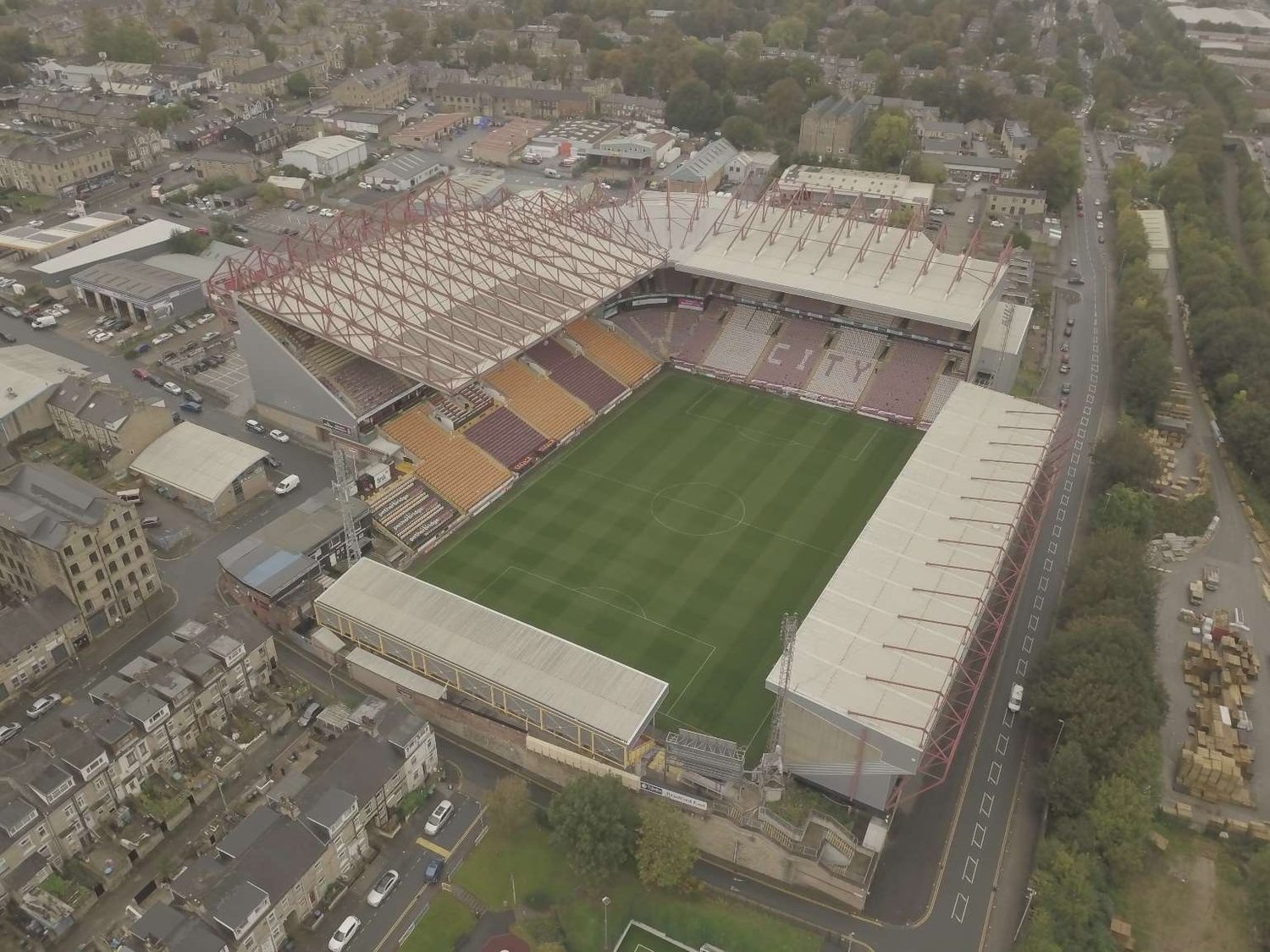
Ahead of a proposed rooftop solar scheme at a professional football stadium, a renewable energy developer needed the condition of the monopitch stand roofs established. Not the structural capacity, which was a separate question, but the covering, the drainage and the weather-tightness. As with any occupied stadium, the survey had to be delivered without roof access and without disrupting the venue.
Sector
Sport and public venue
Scope
Roof condition survey
Access
Drone only. No roof access
Outcome
Very good condition. Minimal defects
The brief
Establishing whether a roof can carry an array and establishing whether it is worth fixing one to are two different questions, and they fail in different ways. A structurally adequate roof with a covering near the end of its life is a scheme that will be opened up again within a decade, with the array in the way.
The developer wanted the second question answered first and answered honestly. The instruction was narrow and deliberate: assess the condition of the stand roof coverings, the ridges, the flashings and the rainwater goods, and isolate anything that needed attention before works rather than after.
How the survey was delivered
The stand roofs were assessed entirely by drone, mapping condition across the coverings and isolating anything affecting weather-tightness.
- High-resolution drone survey of the stand roofs at a capture resolution that resolves individual sheet laps, fixings and flashing details.
- Assessment of the covering, ridges, flashings and rainwater goods for defects affecting weather-tightness.
- Identification of maintenance items, including concealed drainage that is invisible from ground level and easily missed from a roof walk.
- No roof access and no disruption at an occupied venue.
What the survey found
| Assessment | Finding | Consequence for the scheme |
|---|---|---|
| Overall condition | Stand roof coverings found to be in very good condition. | No remedial roofing works required before the PV scheme progressed. |
| Defects | Very minimal defects identified across the coverings. | A short, specific list rather than a general caution. |
| Concealed drainage | Blocked concealed (secret) gutters identified. | Flagged for clearing as routine maintenance ahead of works, while the roof is still accessible. |
| Record | Dated photographic condition baseline captured across both stands. | If a covering defect is disputed after installation, the record of the roof beforehand already exists. |
The issued report recorded that the stand roofs were found to be in very good condition, with very minimal defects to the coverings… blocked concealed (secret) gutters were noted and should be cleared as part of routine maintenance.
Outcome
A clean bill of health on the coverings, established before any panels were fixed.
A short, honest maintenance list. The few items found were isolated and flagged rather than buried in a general caveat.
Blocked concealed gutters caught before works. Secret gutters are the classic miss: invisible from the ground, easy to overlook from the roof, and expensive once an array sits over them.
A clear basis for viability and sequencing, with the condition question closed rather than carried.
What this means for occupied venues and public buildings
A clean result reported honestly is worth more than a clean result assumed. The value in this instruction was not that the roofs were in good condition. It was that the good condition came with a dated record and a specific, actionable list of what to do first.
For any occupied venue considering rooftop solar:
- Survey condition before capacity is designed around it. The two answers inform different decisions and one can invalidate the other.
- Concealed drainage deserves specific attention. Secret gutters, valley gutters and internal downpipes are where weather-tightness quietly fails.
- An occupied building is not a barrier. Drone capture removes the access requirement, which removes most of the operational objection.
Need a roof condition established before an array goes on? Honest findings, dated record.