Home / Case Studies / Port Logistics Warehouses
Case Study · Logistics & Distribution
Three port logistics warehouses, cleared for solar PV under one instruction.
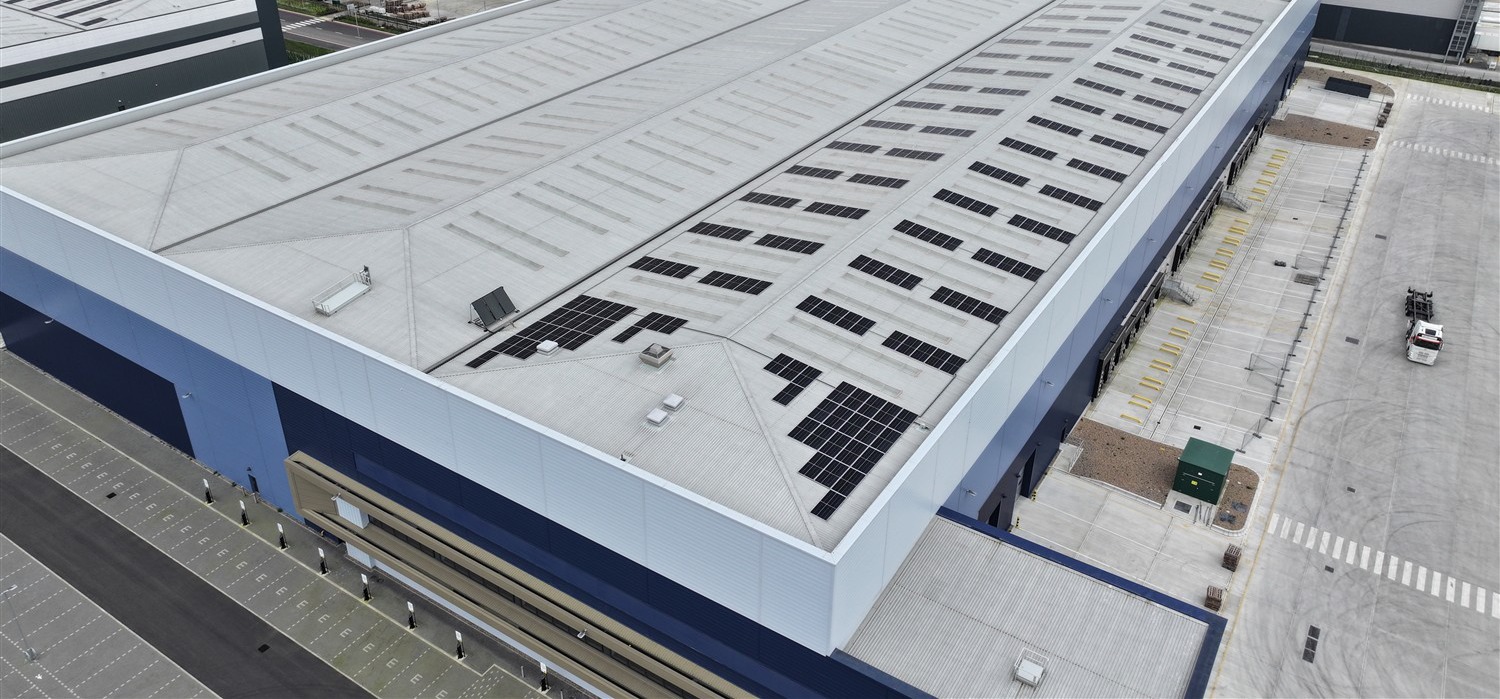
A consultant acting for the operator of a deep-water port logistics park needed to know whether three large distribution warehouses could carry rooftop solar, and whether the roof coverings were in a condition worth installing on. Both questions were answered in a single instruction: a structural roof loading appraisal on each unit, paired with a drone roof condition assessment across all three roofs.
Sector
Port logistics and distribution
Roofs assessed
3 distribution warehouses
Scope
Structural roof loading appraisal and roof condition report
Outcome
All three cleared. No strengthening required
The brief
Port estates are among the best rooftop solar assets in the country. The roofs are large, unshaded, close to heavy on-site demand, and the buildings are usually young enough to have documented steelwork. They are also the least forgiving places to get a structural judgement wrong, because the operation underneath never stops and the cost of a mid-programme surprise is measured in vehicle movements, not weeks.
The consultant leading the feasibility work needed two things resolved before an array layout could be committed to. First, whether the primary and secondary steelwork on each unit could carry the additional dead load and the resulting wind uplift of a rooftop array, without strengthening. Second, whether the roof coverings themselves were in a state that justified fixing a 25-year asset to them. Those are two different questions, and on most schemes they get answered by two different firms on two separate mobilisations.
Constraints, and how the survey was shaped around them
The site is a live, secured logistics operation. Roof access is controlled, working at height on a covering of unverified condition carries its own risk, and no part of the survey could interrupt loading operations below. Those constraints shaped the method rather than limiting it.
- Drone roof condition assessment across all three roofs, capturing the full covering, upstands, rooflights, gutters and penetrations without placing personnel on a covering whose condition was the very thing in question.
- Internal structural inspection of the frame from below, where members, connections and any evidence of past alteration or distress are actually visible. Steelwork is assessed where it can be seen, not inferred from above.
- Desk assessment against the record information supplied for each unit, checked against what was observed rather than accepted at face value.
- One mobilisation covering all three units, so the operational disruption was a single coordinated visit.
What was calculated
Each unit was assessed for the imposed dead load of the array and its mounting system, wind loading derived for the site to BS EN 1991-1-4 and its UK National Annex, snow loading to BS EN 1991-1-3, and PV-specific uplift checked against BRE Digest 489. The governing case on large, low-pitch distribution roofs is almost never the weight of the panels. It is uplift at the edge and corner zones, where local pressure coefficients rise sharply and the fixing regime, not the frame, tends to decide the answer.
Every roof was assessed on its own merits. Three warehouses on one estate, built at different times to different specifications, are three separate structural questions that happen to share a postcode.
What the assessment found
| Assessment | Finding | Consequence for the scheme |
|---|---|---|
| Structural capacity, all three units | Existing primary and secondary steelwork verified as adequate for the proposed array under the governing load combinations. | No strengthening works required. No structural cost line to carry into the business case. |
| Roof covering condition | No Category A defects identified. Observations recorded were maintenance-grade rather than capacity-affecting. | No remedial roofing works needed ahead of installation, and a documented condition baseline dated before any installer set foot on the roof. |
| Wind uplift zones | Edge and corner zones identified as the governing condition, as expected on large low-pitch roofs. | Array layout and fixing regime could be set against a known constraint rather than a generic assumption. |
| Rooflights and penetrations | Located and recorded across all three roofs during the drone assessment. | Usable roof area established for layout, with fragile elements flagged for the installation method statement. |
A clean result is worth as much as a problem found, provided it is evidenced. The value here was not that the answer was yes; it was that the yes came with the calculations, the photographic record and the signature that let the client stop asking the question and start designing the array.
Outcome
All three roofs cleared for solar PV with no strengthening required, signed by a qualified structural engineer.
Two report types, one instruction, one mobilisation. Structural appraisal and roof condition report issued together, each self-contained enough to be passed to a lender, an insurer or an installer without further explanation.
A dated condition baseline for each roof, recorded before installation. If a covering defect is disputed later, the record of what the roof looked like beforehand already exists.
Structural risk removed from the investment case. The scheme moved to layout and procurement with the capacity question closed rather than carried as a contingency.
What this means for similar distribution estates
Most large distribution warehouses built in the last three decades have more structural headroom than their owners assume, and worse edge-zone uplift exposure than their installers assume. Both of those tend to be true at the same time, which is why generic assurance is worth so little on this building type.
Three practical points read across to any multi-unit logistics estate considering rooftop solar:
- Assess unit by unit. Estates are rarely homogeneous. Phased construction, different frame suppliers and later alterations mean the answer can differ between two buildings that look identical from the air.
- Get the condition baseline before the installer arrives. The cheapest time to record the state of a roof covering is before anyone else has been on it.
- Expect uplift, not weight, to govern. On a low-pitch roof the panel dead load is usually modest against the frame's capacity. The fixing regime in the edge and corner zones is where the engineering effort belongs.
Where record information exists and the roof is not in doubt, this work can start as a Desktop Structural Roof Loading Report and escalate to an on-site structural survey only where the engineering says so. Portfolio owners typically run the desktop tier across the estate first to find the units that need attention.
Have a distribution estate to assess? Structural and condition, one instruction.