Large-scale commercial solar, systems from 500 kWp to multi-MW rooftop capacity, introduces structural engineering complexity that is qualitatively different from smaller installations. The differences are not merely a matter of scale; they involve different structural configurations, more complex loading interactions, greater documentation demands from lenders and certification bodies, and the need for more intensive structural engineering engagement throughout the project lifecycle.
This article covers the structural considerations specific to large-scale commercial rooftop solar and how the structural assessment process is structured for these projects.
Multi-Span Buildings: The Core Structural Challenge
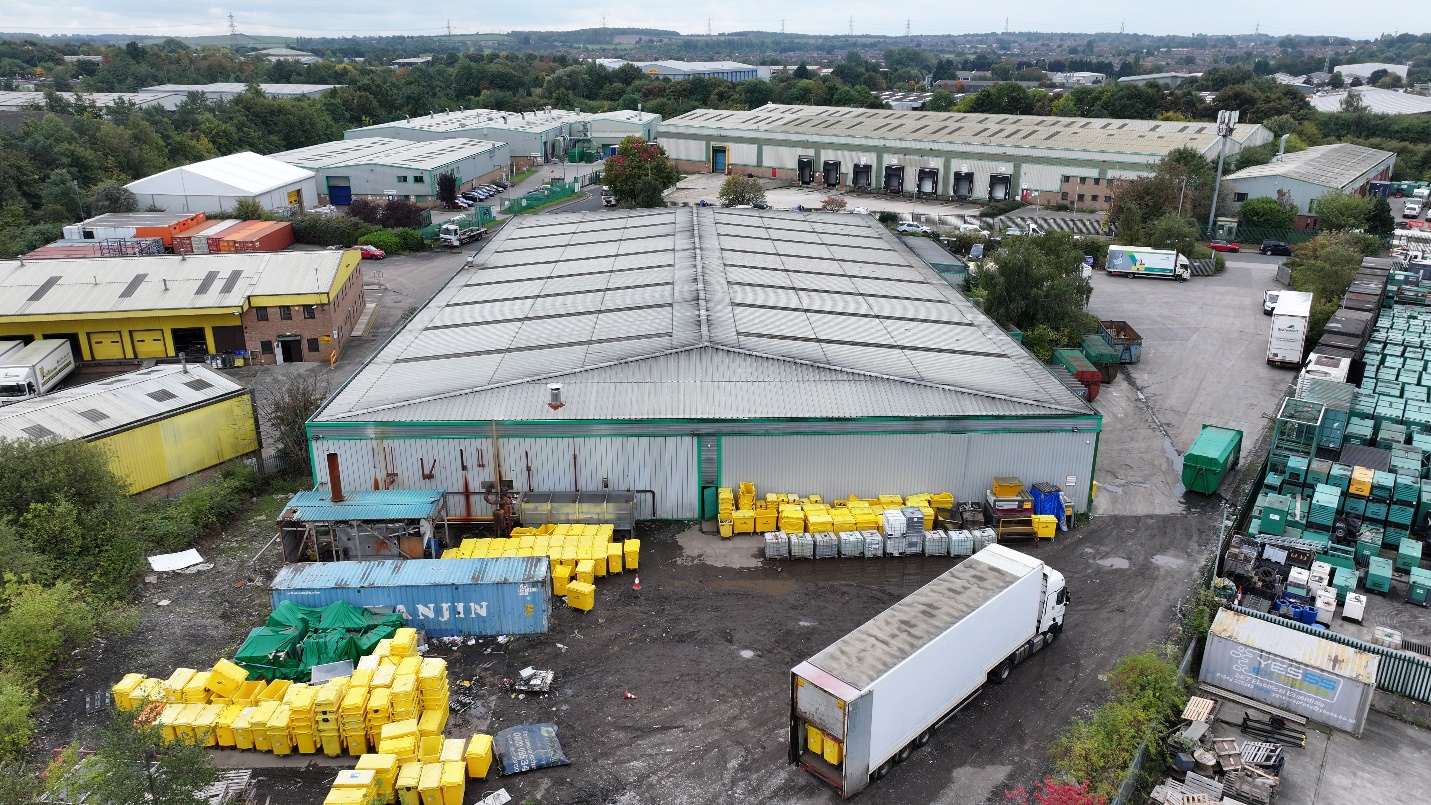
Large commercial facilities, logistics warehouses, manufacturing plants, retail distribution centres, are often multi-span structures: multiple adjacent bays with shared intermediate columns and valley gutters between the spans. Multi-span buildings create structural assessment complexity for rooftop solar in several ways:
Non-uniform loading across the building: Wind pressure distributions across a multi-span roof are not uniform. The first and last spans are exposed to different pressures than internal spans. Valley gutter positions create additional structural complexity where accumulated snow loads must be checked. A structural assessment that treats the building as a single homogeneous roof plane will miss these variations.
Valley gutter drainage: Multi-span buildings depend on valley gutters between spans for drainage. Solar arrays that cover valley gutter zones obstruct access for maintenance and can load the gutter structure with snow or ballast loads it was not designed to carry. The structural assessment must confirm that valley gutter structures are not loaded by the solar installation and that drainage access is maintained.
Differential settlement: Large multi-span structures can exhibit differential settlement between columns, particularly on clay or made-ground sites. Differential settlement can change roof geometry, affecting drainage and the levelness of the solar mounting structure. For sites with settlement risk, a geotechnical review is appropriate before rooftop solar structural assessment proceeds.
Lender Technical Adviser Requirements
Large-scale commercial solar projects are typically financed, either through project finance, green bonds, or corporate PPAs with a capital cost element. Lenders appoint Lender Technical Advisers (LTAs) who review the technical package on behalf of the financing party. LTA structural requirements for large commercial solar typically go beyond MCS MIS 3002 Section 5.9:
- Full calculation pack: Not just a summary report, but the complete structural calculation set showing load derivation, section capacity checks, and fixing adequacy calculations for all zones
- Design basis statement: A document explaining the structural design approach, standards used, and any assumptions or simplifications
- Independent check: For systems above 1 MWp, LTAs may require an independent structural check, a second structural engineer reviews the calculation pack for errors and omissions
- Construction inspection plan: Specification for structural inspection during installation, including hold points (stages where the structural engineer must inspect before work proceeds)
- Structural warranty: Confirmation that the signing engineer's PI covers the full system value, typically £2-5m for large commercial
MCS MIS 3002 Section 5.9 requires confirmation that the roof is adequate, but MCS is a consumer protection framework designed for installations typically under 100 kWp. For a 2 MWp installation carrying £2 million of capital, the lender's exposure is two orders of magnitude greater. The LTA's structural review is proportionate to that exposure, not to the MCS framework. Projects that commission structural work to MCS standard and then discover LTA requirements at financial close face expensive and time-consuming supplementary work.
Structural Engineering Service for Large Commercial
For large-scale commercial solar, the structural engineering engagement is not limited to a desktop report. The typical structural engineering service involves:
Structural Interaction with Roof Plant and Equipment
Large commercial buildings typically carry substantial roof plant: HVAC units, cooling towers, ventilation hoods, communications equipment, and access hatches. These items consume structural capacity before the solar installation is considered. The structural assessment must establish the existing plant loading, from drawings, site survey, or both, before calculating available capacity for the solar array.
Roof plant positions also constrain array layout: panels cannot be placed directly over equipment requiring maintenance access, and minimum clearance zones around plant must be respected. For large commercial buildings, the interaction between plant positions, maintenance access routes, and array layout often reduces effective roof coverage to 50-70% of the nominal roof area.
Multi-Building Portfolio Structural Assessment
Large-scale commercial solar programmes often involve multiple buildings at a single site or across a portfolio. Structural assessment for multi-building programmes benefits from a programme approach:
- Master structural brief: one document covering the design standards, load calculation methodology, and reporting requirements for all sites. Reduces repetition and ensures consistency.
- Batch instruction: all sites instructed simultaneously to a single structural engineering firm, allowing resources to be deployed efficiently and lessons learned on early sites to be applied to later ones
- Standardised report format: consistent documentation across sites simplifies lender review and portfolio management
- Framework rates: agreed fee schedule for desktop reports, site surveys, and calculation packs on each building type, removing per-site procurement overhead
Structural Monitoring for Post-Installation Asset Management
For large-scale commercial solar assets, structural monitoring during the operational period is increasingly specified as a condition of insurance or lender requirements. Structural monitoring can be passive (annual visual inspection and fixing torque check) or active (structural health monitoring sensors on key elements).
The structural engineer should specify a monitoring and inspection programme as part of the post-installation certification. This programme covers: inspection frequency, the scope of each inspection, what constitutes a reportable anomaly, and the escalation path if an anomaly is found. An asset manager inheriting a large commercial solar installation without a structural inspection programme has an undocumented risk that may only become apparent at refinancing or disposal.
Programme Management for Large-Scale Structural Assessment
The structural workstream for a multi-MW commercial solar project must be actively programme-managed, not left to the structural engineering firm to self-organise. The structural firm is a professional services provider, not a project manager, they will deliver what they are asked for, when they are asked for it, but they will not proactively identify schedule risks or flag downstream impacts of delays in the structural workstream. That programme management responsibility sits with the project manager.
Key programme management activities for large-scale structural assessment:
- Documentation assembly: Drawings for multi-span or multi-building sites must be assembled systematically before instruction. Missing drawings for even one building block in a multi-span site can delay the entire structural assessment while they are located.
- Design freeze enforcement: On large sites with multiple designers (energy consultant, EPC, owner's engineer), design changes are common. A formal change control process, any change to array layout, panel specification, or mounting system triggers a structural engineer notification and review, prevents scope creep that invalidates completed structural work.
- Milestone tracking: Desktop assessment complete, site survey complete (if required), calculation pack issued, LTA review submitted, LTA comments resolved, structural sign-off received. Each milestone should have a target date and an owner.
- LTA engagement timing: For financed projects, the LTA review of the structural calculation pack can take 2-4 weeks and may generate comments requiring clarification. This review time must be in the programme from the outset, not discovered at financial close.
Structural Engineering Specification for Multi-MW Projects
The structural engineering scope for a multi-MW project is substantially larger than for a small commercial installation. A clear scope specification at instruction prevents scope disputes mid-assessment and ensures the structural engineer delivers what the project actually needs.
For a multi-MW rooftop solar project, the structural engineering scope typically includes:
- Feasibility structural assessment: identify constraints, confirm viability, scope any reinforcement required
- Design stage structural report: full Eurocode calculation pack, dead load, wind uplift (all zones), snow load, load combinations, section checks for all structural elements in the load path, fixing adequacy by zone
- Design basis statement: explanation of calculation approach, standards used, assumptions, and limitations
- Construction inspection plan: schedule of hold points during installation, what the engineer will check at each hold point, and how deviations from design will be managed
- Site inspections during installation: presence at key hold points (typically fixing installation and practical completion)
- Post-installation sign-off letter: confirmation that as-installed system matches the structural assessment and is structurally adequate
- PI confirmation: professional indemnity insurance confirmation, with coverage amount and policy reference
This scope exceeds the MCS MIS 3002 Section 5.9 minimum but meets the reasonable expectations of lenders, insurers, and asset managers for a multi-MW installation. Commissioning to this scope from the outset, rather than MCS minimum and then separately commissioning supplements for lender review, is more efficient and ensures a single coherent technical document rather than a patchwork of reports.
Structural Monitoring During the Operational Period
Large-scale commercial solar assets at the multi-MW scale attract institutional investment, insurance-grade documentation, lender-grade technical reports, and asset management standards consistent with other institutional-grade infrastructure. Structural monitoring during the operational period is increasingly a condition of institutional insurance and lender requirements.
A structural monitoring programme for a multi-MW rooftop solar installation should specify:
- Annual visual inspection: Walkover of accessible areas checking for fixing degradation, panel movement, signs of roof deflection, and drainage changes. Conducted by a competent inspector (not necessarily a structural engineer) and reported against a standard pro forma.
- Five-yearly structural inspection: Conducted by a structural engineer. Includes torque checks on a sample of mechanical fixings, close-range inspection of connection details at edge and corner zones, and review of any changes to the host building structure.
- Event-triggered inspections: Inspection following any severe weather event (wind gusts exceeding the design wind speed), seismic event, or any structural work on the host building. The trigger conditions and response protocol should be specified in the monitoring programme.
- Reporting: Annual inspection reports filed in the asset management system, with any anomalies escalated through a defined chain of custody to the asset manager and insurer.
An asset manager who inherits a multi-MW solar installation without a structural monitoring programme has an undocumented risk exposure. The monitoring programme is not a nice-to-have addition to the project, it is part of the due diligence pack that demonstrates the installation was commissioned and is being managed to institutional standard.
Phased Construction and Cumulative Loading: Managing Multi-Build Programmes
Multi-megawatt commercial solar projects on large industrial estates are often delivered in phases, reflecting grid connection capacity constraints, planning consent conditions, financing tranches, or the availability of roof area across multiple buildings in the same estate. Each phase adds incremental loading to buildings that may already be carrying PV from a previous phase, and the structural assessment programme must address this cumulative loading rather than treating each phase as an independent installation on a previously unloaded building.
The cumulative loading risk is most significant on buildings where Phase 1 consumed the majority of the available residual structural capacity. If a building’s structural assessment for Phase 1 identified that residual dead load capacity was 0.25 kN/m² and Phase 1 installed at 0.20 kN/m², the remaining capacity of 0.05 kN/m² may be insufficient for any meaningful Phase 2 addition without structural upgrade. The Phase 2 structural assessment must be conducted on the basis of the as-built Phase 1 loading, not the original building dead load capacity without Phase 1.
Programme and documentation discipline is essential for multi-phase projects. The as-built dead load of each phase should be confirmed by the installer and filed in the project record, not assumed from the design specification. Panel substitutions, racking system changes, or additional ballast added to address wind uplift issues during Phase 1 installation all affect the actual as-built dead load. If Phase 2 is instructed several years after Phase 1 and the Phase 1 as-built specification has not been recorded, the Phase 2 structural engineer must either assume the worst-case loading for Phase 1 (most conservative approach) or conduct a Phase 2 survey that includes verification of Phase 1 loads. Neither approach is as efficient as maintaining accurate as-built records from the outset.
Structural Monitoring and Long-Term Integrity for Multi-MW Arrays
For multi-megawatt installations representing significant capital investment, a structural monitoring programme during and after construction provides an additional layer of risk management beyond the pre-installation clearance assessment. Structural monitoring instruments provide real-time or periodic data on the performance of the building structure under the as-installed PV loading, confirming that actual structural behaviour matches the engineering predictions in the clearance assessment.
The most relevant monitoring instruments for rooftop PV applications are tilt sensors (inclinometers) on structural columns and rafters to detect unexpected settlement or deformation; strain gauges on critical structural members at maximum load positions to measure actual member stresses under combined dead and wind loads; and crack width gauges at masonry or concrete elements where differential movement is a concern. On standard steel portal frame buildings with unconditional structural clearance, monitoring instrumentation is rarely required, the structural margin is adequate and the engineering prediction is confident. On marginal or conditional clearance buildings, particularly older structures where some structural uncertainty remains, periodic settlement monitoring for the first two to three years post-installation provides an early warning system against unexpected structural behaviour.
Drone visual inspection of the installed PV array and racking system at 12-month intervals is the most cost-effective structural monitoring approach for most commercial solar assets. The inspection confirms that racking connections remain tight, that purlin deflections visible under the array are not progressing, that no fixing corrosion has developed at attachment points, and that no areas of roof cladding adjacent to the array show signs of stress that might indicate load redistribution from racking attachment. Annual drone inspections on commercial solar assets produce a photographic record of racking and structural performance over time that supplements the pre-installation clearance documentation and supports long-term asset integrity claims.
Commercial solar projects above 500kW on a single building or across connected structures should commission a programme-level structural assessment rather than a building-by-building series of individual reports. A programme assessment establishes a common methodology, load assumption framework, and reporting format that applies consistently across the portfolio, reducing the risk of inconsistent conclusions between reports and eliminating the variation in format that creates problems at MCS and lender due diligence review.
WHERE SOLAR SURVEYS ADDS VALUE
MULTI-MW STRUCTURAL ASSESSMENT, PHASED PROGRAMMES AND CUMULATIVE LOADING
Solar Surveys has delivered structural assessments for multi-MW commercial solar programmes across large industrial estates, managing cumulative loading analysis across multi-phase construction and coordinating structural assessment with grid connection and planning programme milestones. Reports for each phase reference the as-built loading from previous phases and are issued in a consistent format that streamlines lender and insurer technical review across the programme. Portfolio master registers are maintained and updated with each phase delivery.
CLIENT PROFILE
A solar developer managing a 4.2 MW phased installation across a 12-building industrial estate instructed structural assessments for Phase 1 (6 buildings, 1.8 MW) and Phase 2 (4 buildings, 1.6 MW) sequentially. Phase 2 assessments explicitly referenced Phase 1 as-built loading data provided by the installer. Three Phase 2 buildings received unconditional clearance; one required a dead load constraint because Phase 1 loading had consumed a larger share of structural capacity than the Phase 1 design specification indicated. The constraint was manageable within the Phase 2 racking specification, and all 10 buildings in Phases 1 and 2 achieved clearance within the programme. Phase 3 (2 buildings, 0.8 MW) is being assessed ahead of grid connection confirmation.
THE STRUCTURAL TRINITY
Three Reports That Clear a Commercial Solar Site for Installation
READY TO COMMISSION
Get a Quote in 24 Hours.
Structural surveys, Desktop Structural Roof Loading Reports, drone assessments and solar design packages, delivered to a 48-hour benchmark.
Get a Quote