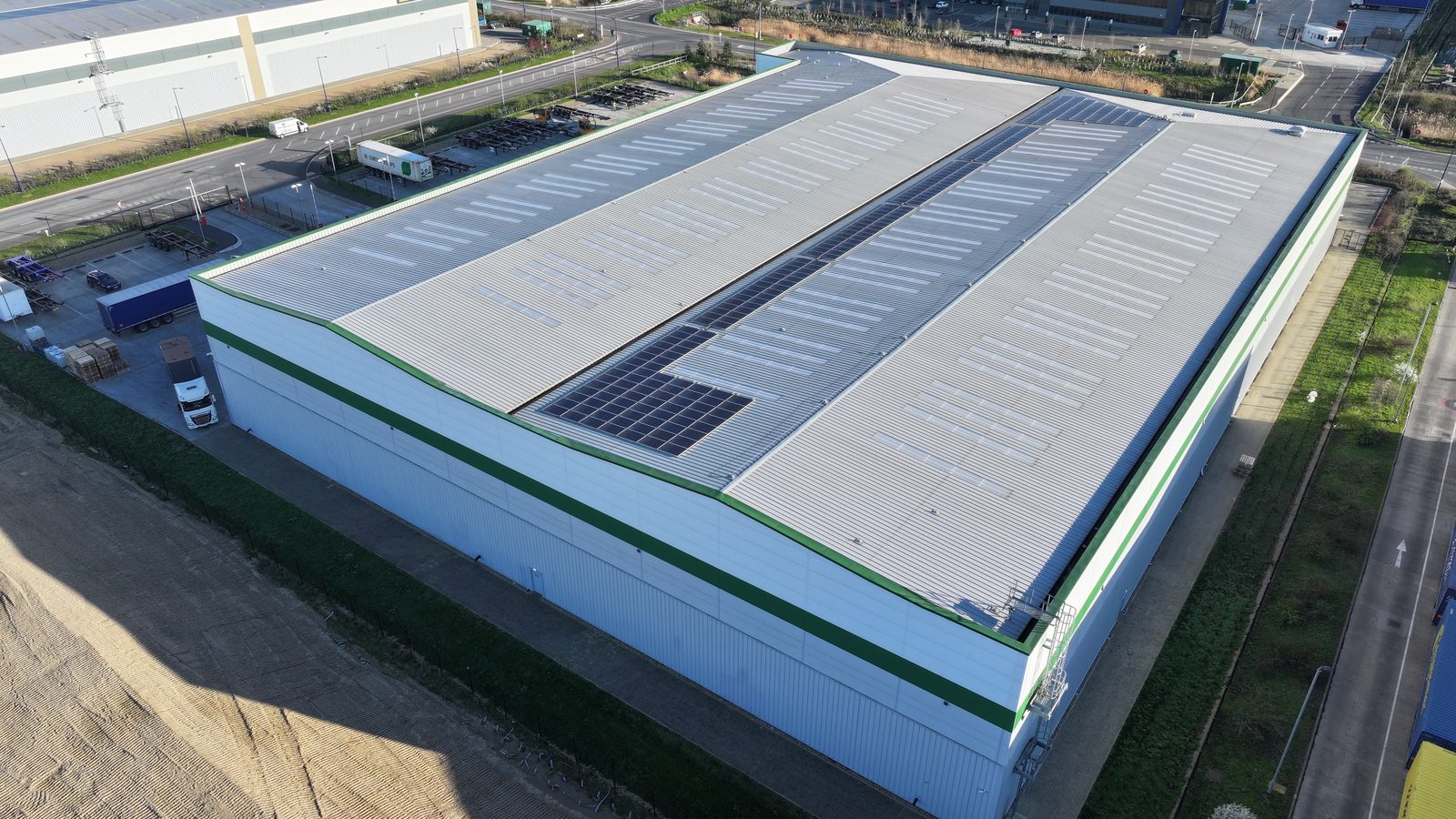
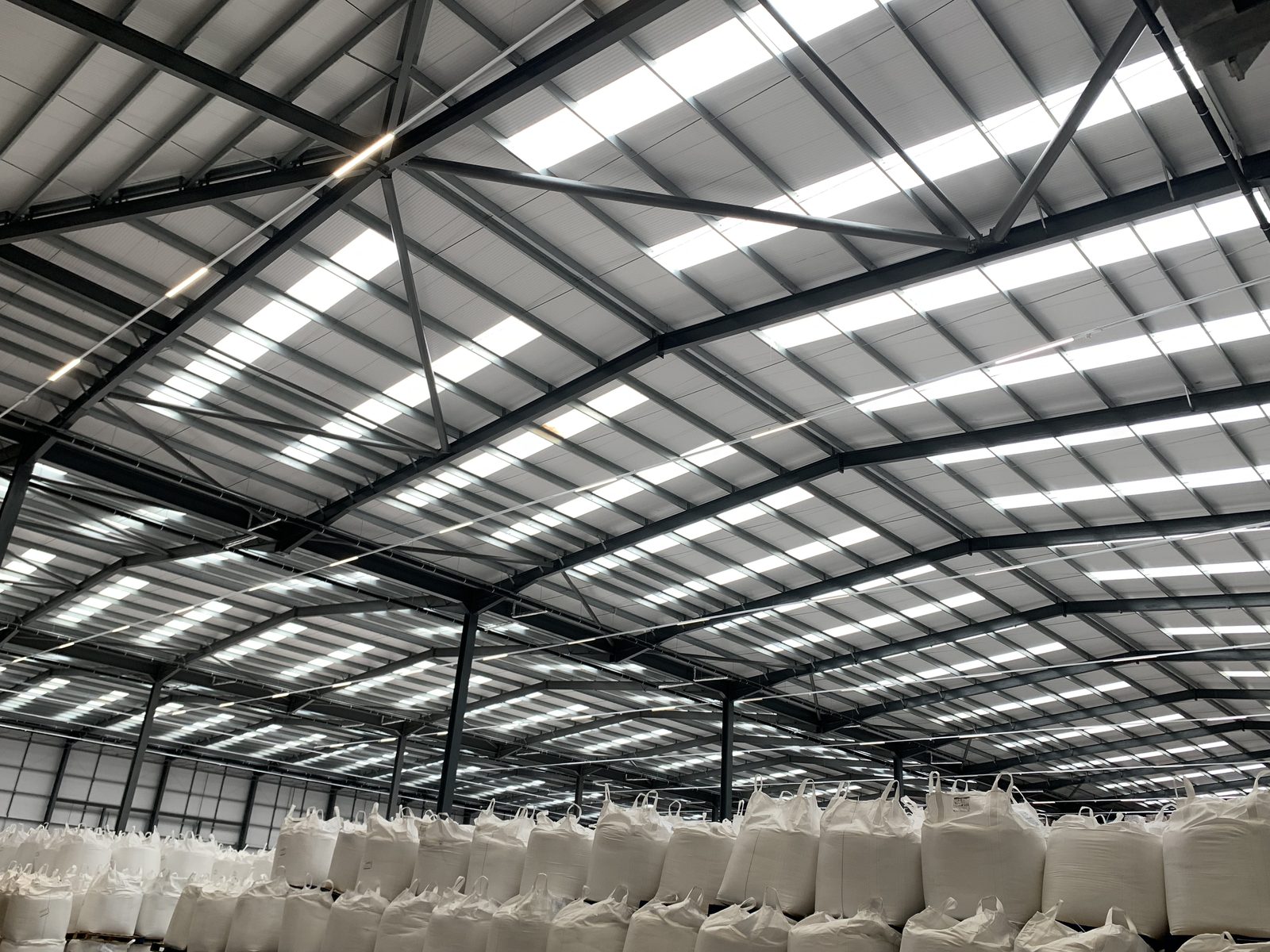
Structural sign-off for solar PV is one of the most referenced but least precisely understood concepts in commercial solar pre-construction. Project teams, installers, developers, and lenders all use the term, but what it actually represents, who is qualified to issue it, what it must state, and why it cannot be provided by the installer themselves are questions that are not always clearly answered.
Structural sign-off is the written confirmation, signed by a qualified structural engineer, that a specific building is structurally adequate to support a specific proposed solar PV installation. It is not a general suitability assessment, not a roof condition survey, not an electrical safety check, and not a planning approval. It is a precise engineering document that confirms one thing: the building will not fail structurally under the proposed loading of the array and its racking and fixing system.
This article explains what structural sign-off is, who can issue it, what it must contain, why self-certification is not acceptable, and how the sign-off document connects to downstream compliance requirements including MCS certification, G99 DNO applications, and lender technical adviser review.
What Structural Sign-Off Is, Precisely Defined
Structural sign-off for commercial solar PV is a formal written engineering statement in which a qualified structural engineer confirms, on the basis of a structural assessment of the host building, that the proposed solar PV installation is structurally acceptable. The assessment may have been conducted by desktop methodology or by on-site survey, depending on the building and the data available. The sign-off document is the output of that assessment.
The sign-off has three essential properties. It is site-specific: it refers to the specific building at the specific address, the specific proposed array size and configuration, and the specific mounting and fixing system. It is qualification-backed: it carries the signature of a structurally qualified engineer whose professional membership makes them personally accountable for the assessment. And it is prospective: it is produced before installation commences, not after.
Structural sign-off is not a certificate of roof condition. A building can have a deteriorating roof membrane and still receive structural sign-off if the structural members are adequate for the proposed loading. Conversely, a building with a pristine roof membrane can fail to receive structural sign-off if the structural members cannot carry the additional dead load or resist the wind uplift forces the array generates.
Who Is Qualified to Issue Structural Sign-Off
Only a qualified structural engineer can issue structural sign-off for commercial solar PV. The qualification requirement is defined by MCS MIS 3002 Section 5.9 as membership of the Institution of Structural Engineers (IStructE) at Member or Fellow level (professional qualification or suitably qualified structural engineer) or membership of the Institution of Civil Engineers (ICE) at Member or Fellow level ( or equivalent structural engineering qualification).
This requirement is not satisfied by:
- Energy assessors or Domestic Energy Assessors (DEAs), regardless of their solar PV installation experience
- RICS-qualified surveyors or building surveyors, whose qualification does not cover structural engineering
- Architectural technicians or architectural technologists
- Engineering technicians who do not hold structural engineer status
- Solar PV system designers, even where they have engineering backgrounds in other disciplines
- The installing contractor or any party with a financial interest in the installation proceeding
The independence requirement in the final point is particularly important. Structural sign-off must come from an engineer who is independent of the installation. This is not merely a regulatory requirement, it is the mechanism that makes the sign-off meaningful. An engineer who benefits commercially from the installation proceeding has a conflict of interest that compromises the objectivity of their assessment. Independent engineering sign-off is the cornerstone of structural accountability for rooftop solar.
What the Sign-Off Document Must Contain
The structural sign-off document, whether it takes the form of a standalone letter, a structured report, or a report with appendices, must contain certain elements to be compliant with MCS MIS 3002 and acceptable to lenders, insurers, and building control.
Site identification. The document must identify the specific building by address and describe the structural system assessed. References to "the above-mentioned property" without a stated address, or generic descriptions that do not confirm the specific building type, are insufficient.
Engineer identification and qualifications. The signing engineer's name, professional designation (suitably qualified structural engineering professional), and professional registration number should be stated. The document must carry the engineer's handwritten or verifiably electronic signature.
Assessment basis. The document should state whether the assessment was conducted by desktop methodology or on-site survey, and the primary data sources used (structural drawings, typology benchmarks, site measurements). This statement is increasingly required by TAs and lenders as part of due diligence review.
Design standards. The Eurocode standards applied, at minimum EN 1991-1-4 (wind actions) and EN 1993-1-3 (cold-formed steel sections), should be identified, along with the UK National Annexes used.
Structural verdict. The core sign-off statement must confirm that the building is structurally adequate for the proposed installation. Where the adequacy is subject to conditions, maximum panel weight, minimum fixing density, exclusion zones, or required remediation works, these conditions must be explicitly stated as part of the sign-off.
Validity scope. The sign-off is valid for the specific installation described. Any change to the installation specification, panel weight, racking type, array area, fixing system, that was not covered by the assessment requires a supplementary confirmation before the revised installation proceeds.
Why Self-Certification Is Not Acceptable
Self-certification, where the installing contractor assesses and certifies the structural adequacy of the installation, is not acceptable as structural sign-off for commercial solar PV for three fundamental reasons.
First, the installer typically does not hold the structural engineering qualifications that MIS 3002 Section 5.9 requires. Solar PV installers are accredited for installation work; they are not required to be qualified structural engineers. A structural assessment requires engineering training and professional accountability that installation accreditation does not provide.
Second, even where an installer employs or engages engineers, a self-certified assessment creates a conflict of interest. The party certifying structural adequacy has a financial interest in the installation proceeding. This conflict is not hypothetical, there have been cases where self-certified installations subsequently showed structural issues that independent pre-installation sign-off would have identified. The independence requirement exists precisely to protect against this.
Third, self-certified structural assessments are not accepted by MCS certification bodies, by project finance lenders and their technical advisers, by insurance underwriters, or by building control. A project that reaches the MCS audit, lender due diligence, or building control review stage with self-certified structural documentation will be required to obtain independent structural sign-off before the relevant approval process can continue.
How Sign-Off Connects to Downstream Compliance
Structural sign-off is not an isolated document. It connects directly to several downstream compliance requirements that commercial solar PV projects must satisfy.
MCS certification. MCS MIS 3002 Section 5.9 requires structural sign-off from a qualified engineer before installation. The MCS certification body's inspection will verify that sign-off was obtained, that it comes from a qualified engineer, and that it covers the installed system.
G99 DNO application. Grid connection applications for installations above 50 kW require technical documentation confirming that the installation is structurally adequate for the proposed array. The structural sign-off document is a component of the G99 technical submission pack.
Insurance. Commercial property insurers and commercial solar PV specialist underwriters require evidence of structural sign-off before issuing or maintaining coverage. An installation without independent structural sign-off may not be insured, and in the event of a structural failure, a claim may be declined on the basis that no independent sign-off was obtained.
Project finance due diligence. Lenders and their technical advisers require structural sign-off as part of the technical documentation pack reviewed at financial close. The sign-off document must meet the lender's specified standards for engineer qualification and report content.
Common Misconceptions About Structural Sign-Off
Several misconceptions about structural sign-off are sufficiently widespread to be worth addressing directly.
"The installer checked it." An installer's structural check is not structural sign-off. The installer may have reasonable technical knowledge of the installation system, but they do not provide the independent, qualified engineering sign-off that compliance frameworks require.
"The manufacturer says the system is suitable." A racking system manufacturer's datasheet confirming that their product is suitable for a specified dead load and wind speed is product certification, not structural sign-off. It confirms the product's performance characteristics; it does not confirm that the specific building can carry the proposed loading.
"The roof is new, so it must be adequate." Roof age or condition tells you nothing about structural capacity for PV loading. A recently replaced roof membrane on a structurally adequate building is not a structural assessment. Conversely, an older roof on a structurally robust building may be perfectly adequate for a substantial array.
"We got sign-off after installation." Retrospective sign-off does not satisfy MIS 3002 Section 5.9, which requires written confirmation before installation commences. It may satisfy some building control and insurance requirements, depending on circumstances, but it represents a compliance gap that cannot be fully remedied after the fact.
Who Can Sign Off: Professional Qualification Requirements
The question of who is qualified to issue a structural sign-off for commercial solar PV is more precisely defined than many in the industry appreciate. Regulatory requirements, professional indemnity insurance conditions, and the expectations of MCS Scheme Providers and lenders all converge on a consistent answer: structural sign-off should be issued by a qualified Structural Engineer or Civil Engineer with appropriate professional indemnity cover.
In the UK, structural engineer status is awarded by the Engineering Council through licensed professional engineering institutions including the Institution of Structural Engineers (IStructE) and the Institution of Civil Engineers (ICE). A structural engineer (professional qualification or suitably qualified structural engineer) or a civil engineer ( or equivalent structural engineering qualification) who has signed the structural report is fulfilling the professional sign-off requirement. Incorporated Engineer (IEng) status from the same institutions is also widely accepted, though some lender technical advisor requirements specifically reference . If in doubt about a specific lender’s requirements, confirming the acceptable qualification level before instruction avoids having to replace a report at a late stage.
Reports issued by unqualified individuals, technicians, draughtspersons, or non-structural engineers without an institutional membership number, do not constitute professional structural sign-off regardless of their technical competence. MCS Scheme Providers will reject such reports at certification audit. Similarly, reports issued by firms that carry “structural” in their trading name but whose personnel do not hold IStructE or ICE membership do not satisfy the qualification requirement. The safest approach when selecting a structural survey provider is to confirm that the signing engineer’s professional institution membership number will appear on the issued report, this is the single most verifiable indicator of qualification compliance.
Professional indemnity insurance (PII) is the second qualification component. A structural engineer carrying PII provides the developer, lender, and insurer with recourse in the event of a negligent assessment, if the structural sign-off is later found to have been incorrect in a way that causes loss, the PII policy responds to claims. Most lender requirements specify a minimum PII coverage level, typically £1M to £5M per claim for standard commercial projects. The structural engineering firm should be able to provide their PII certificate on request.
Structural Sign-Off Validity: Time Limits and When Renewal Is Required
A structural sign-off report is valid as an assessment of the building’s structural condition at the date it was issued. It does not represent a guarantee of future structural performance, and its continued relevance depends on the building condition remaining consistent with the conditions observed at the time of assessment. Understanding when a sign-off document remains valid and when renewal is required is essential for asset managers, acquirers, and lenders reviewing structural documentation on existing solar installations.
There is no universal legally mandated validity period for structural sign-off reports in the UK. Different downstream audiences apply different standards. MCS Scheme Providers accept structural reports without a formal time limit, provided the report reflects the installation as built, if the installation has been modified from the specification described in the report, the report may no longer be valid for that modification even if it was recently issued. Lenders financing asset acquisitions typically apply a five-year validity window, after which they may require a fresh structural assessment as a condition of finance. Insurers generally do not impose explicit validity limits but may request updated structural evidence following a significant change in building condition or after a major weather event.
Practical triggers for structural sign-off renewal include: the acquisition of an existing solar asset by a new party whose financing requirements include a fresh structural assessment; a material change to the installation (additional panels, replacement racking, changed layout) that is not covered by the original sign-off; significant deterioration in the building fabric observed during routine maintenance inspection; and the passage of time on assets where the building was already showing age-related deterioration at the time of the original assessment. Assets on buildings constructed before 1980 should be reviewed against the five-year renewal standard even where the financing or insurance environment does not strictly require it, as the rate of structural deterioration in older buildings is higher and the original assessment may no longer reflect current condition.
Structural Sign-Off in the Context of MCS Certification
MCS Scheme Provider audits of commercial solar installations routinely identify structural sign-off documentation as one of the most common areas of non-compliance or incomplete documentation. Understanding what the MCS framework requires, and how the structural sign-off fits within the broader MCS documentation package, prevents certification delays that can hold up ROC or REGO registration.
MIS 3002 Section 5.9 requires that the installer, where the installation involves structural modifications to a building or where the structural adequacy of the building is relevant to the safety of the installation, must obtain and retain evidence of structural assessment by a suitably qualified engineer. For commercial rooftop PV installations above domestic scale, this requirement is universally applicable: the installation modifies the load environment of the building and the structural adequacy of the building is directly relevant to the long-term safety of the array and its fixings.
The structural sign-off document must be available at the MCS audit. Documents that are “in preparation”, “to follow”, or “available on request” are not acceptable as audit evidence. The signed report should be filed in the project documentation pack before the MCS certification application is submitted, and any conditions stated in the report should be documented as resolved in the project record before the certification audit is conducted. An MCS Scheme Provider that identifies an unresolved structural condition during audit will typically place the certification on hold pending resolution, a delay that can affect ROC accreditation dates and therefore project revenue if the certification hold occurs after commissioning.
Structural sign-off is not a rubber stamp. It is a formal professional output that exposes the signing engineer to professional liability if the assessment is later found to be incorrect in a way that causes loss. That professional accountability, underpinned by PI insurance, is precisely what makes the document acceptable to MCS Scheme Providers, DNOs, lenders, and building control.
WHERE SOLAR SURVEYS ADDS VALUE
INDEPENDENT STRUCTURAL SIGN-OFF, QUALIFIED, ACCOUNTABLE, 48-HOUR BENCHMARK
Solar Surveys provides independent structural sign-off for commercial solar PV from professional qualification and -qualified engineers with no commercial interest in the installation outcome. Every sign-off document identifies the signing engineer's qualifications, states the assessment basis and design standards, and explicitly addresses dead load and wind uplift adequacy for the specific proposed installation. Sign-off documents are formatted for MCS MIS 3002, G99, insurance, and lender TA requirements. Desktop report sign-off is delivered within a 48-hour benchmark; on-site survey sign-off within 48 hours of the site visit.
CLIENT PROFILE
A commercial landlord was approached by a solar developer proposing a rooftop installation on their distribution warehouse. The developer's installer had provided a one-page self-certified structural assessment. The landlord's solicitor advised that self-certified structural documentation was insufficient for the proposed lease arrangement and that independent engineering sign-off was required. Solar Surveys provided a desktop structural report and sign-off within 48 hours. The sign-off satisfied the landlord's solicitor, the developer's insurer, and the MCS certification requirement. Installation proceeded on the original programme without delay.
THE STRUCTURAL TRINITY
Three Reports That Clear a Commercial Solar Site for Installation
READY TO COMMISSION
Get a Quote in 24 Hours.
Structural surveys, Desktop Structural Roof Loading Reports, drone assessments and solar design packages, delivered to a 48-hour benchmark.
Get a Quote