The structural engineer's report is frequently the item that delays commercial solar project drawdown. It arrives late, in the wrong format, without the content a technical adviser needs to sign off, or signed by someone who does not meet the lender's qualification requirements.
These delays are avoidable. They arise from a predictable set of recurring errors that, once understood, are straightforward to eliminate. This article explains exactly what finance teams and their technical advisers require from a structural report, and what typically causes the most common delays at the due diligence stage.
Why the Structural Report Matters at the Finance Stage
Commercial solar project finance typically involves a lender advancing debt against a long-term contracted income stream, a power purchase agreement, a lease, or an export arrangement. Before advancing capital, the lender appoints an independent technical adviser (ITA) to review the technical documentation and provide a due diligence report confirming that the project is technically sound.
The ITA's structural review is one component of a wider technical due diligence exercise covering energy yield, grid connection, equipment specification, and contractor appointment. But it is often the component that generates the most queries, because structural reports are produced across a wide range of formats and quality standards and finance teams frequently receive reports that do not meet the requirements for a clean ITA sign-off.
An ITA that cannot sign off the structural review, because the report is inadequate, the signatory is unqualified, or the array configuration is inconsistent with the EPC contract, will not provide clearance to the finance team. Without ITA clearance, drawdown does not happen. The project programme absorbs the delay while the structural deficiency is resolved.
What a Lender-Accepted Structural Report Must Contain
The requirements described below reflect the standard position of technical advisers working across commercial solar project finance in the UK market. Individual lenders may have additional requirements, but the following represents the minimum expected standard:
Engineer identification. Full name, professional qualifications (suitably qualified , or equivalent membership), and professional indemnity insurance confirmation: the insurer's name, the limit of indemnity, and a confirmation that the policy covers structural assessments of this type. Some lenders require a copy of the PI insurance certificate at the time of due diligence rather than a confirmation statement in the report.
Building and scope identification. Full site address, building reference, construction type (e.g. steel portal frame, pre-cast concrete, timber frame), roof configuration, approximate construction date, and the specific roof area(s) assessed. The array configuration reviewed must be stated: total capacity, approximate panel count, layout reference, and the panel and racking specification used as the basis of the structural assessment.
Assessment methodology. A clear statement of the data sources used (existing drawings, site measurements, remote data sources), the calculation approach, and the applicable engineering standards. Where the assessment is based on assumed parameters in the absence of drawings, this should be stated explicitly, with the assumptions identified.
Calculation summary. The report must show enough of the calculation basis for a competent engineer to confirm the assessment is correct. This does not require full calculation appendices in all cases, but it does require more than a verdict statement with no engineering content. At minimum: the dead load per m² of the proposed array, the calculated stress ratio or utilisation factor for the governing purlin check, the design wind speed used, and the calculated uplift force compared to the fixing resistance.
Structural verdict. Unambiguous. One of three outcomes: structural clearance (installation can proceed as proposed), conditional clearance (installation can proceed subject to conditions, which are listed in full), or referral to on-site survey (additional investigation required before clearance can be issued).
Signature and date. The report must be signed and dated by the qualified engineer who produced it. Electronic signatures are acceptable. Unsigned documents are not.
The Most Common Causes of ITA Rejection
Unqualified signatory. The report is signed by a person who is not a structural or civil engineer. Energy assessors, general surveyors, architects, and roof specialists may produce useful building documents, but they are not qualified to sign structural engineering assessments for project finance purposes. ITAs working for project lenders will not accept structural sign-offs from unqualified parties.
Array configuration mismatch. The structural report was produced at an early design stage. The EPC contract was subsequently executed against a revised layout. The ITA identifies the discrepancy between the structural report configuration and the EPC contract configuration. The structural report must be updated to reflect the final array configuration before ITA sign-off can be provided.
Missing PI insurance confirmation. This is a consistently recurring issue. The lender's term sheet typically requires PI confirmation as part of the technical due diligence pack. The structural report does not contain it. An RFI is issued; the engineer responds; the response is processed; the ITA sign-off is updated. This adds days to a process that should be clean on first submission.
No calculation content. The report states a verdict without showing any engineering basis. An ITA cannot sign off a structural report that provides a conclusion without any supporting calculation evidence. Even a brief calculation summary, dead load utilisation, governing wind speed, fixing capacity ratio, demonstrates that an engineering assessment was carried out.
Condition not discharged. The structural report issues a conditional clearance, but the condition (typically pre-installation remediation, racking system specification confirmation, or updated array layout) has not been discharged before due diligence. The ITA notes the outstanding condition and cannot provide a clean sign-off until it is resolved.
Timing: When to Commission the Structural Report in the Finance Programme
The structural report should be commissioned at RIBA Stage 3 (Developed Design) at the latest. Commissioning it at Stage 4 or later, particularly after the EPC contract has been executed, risks a configuration mismatch between the structural report and the contract, or a discovery of a structural condition that requires remediation and was not budgeted in the project cost plan.
A desktop structural roof loading report with a 48-hour delivery benchmark can be obtained within 48 hours of receipt of complete information at Stage 3. There is no programme reason for the structural report to be the last item in the due diligence pack.
A structural report that passes ITA review on first submission reduces due diligence friction, maintains programme, and signals to the finance team that the technical package has been professionally prepared. A report that requires multiple rounds of revision signals the opposite.
LTA Review Workflows: How Finance Teams Can Prepare
Lender technical advisor reviews of structural documentation for commercial solar finance are most efficiently managed when the finance team understands what the LTA is looking for and has organised the structural evidence package in advance of the LTA’s review. An LTA who receives a disorganised or incomplete structural evidence package will raise more queries and take longer to complete their review than one who receives a clean, structured package with all required documents clearly identified.
The LTA structural evidence package should be presented as a named folder or PDF bundle with the following clearly labelled sections: (1) List of assessed sites with clearance status summary; (2) Individual structural reports for each site (signed PDFs, version-controlled); (3) Condition resolution evidence for any conditional reports (racking supplier dead load confirmations, installer edge zone confirmation notes); (4) As-built racking specifications confirming panel weight and mounting system; (5) Any supplementary wind zone plans or fixing schedules included with the structural reports; (6) Structural engineer’s professional indemnity insurance certificate.
The LTA’s review is typically conducted against a checklist that addresses structural methodology, engineer qualifications, clearance status, outstanding conditions, and report currency. Providing a cover summary that maps each item on the LTA’s standard checklist to the relevant document in the package reduces the LTA’s review time and the number of information request rounds. Finance teams who have experienced multiple LTA reviews typically develop their own cover summary template based on recurring LTA requests, and this investment in preparation pays dividends in faster review cycles on subsequent transactions.
Resolving LTA Queries: Common Issues and Efficient Responses
Despite thorough preparation, LTA queries on structural documentation are a common feature of commercial solar finance processes. Understanding the most frequent query types and how to resolve them efficiently prevents queries from creating extended delays in the finance close timeline.
The most frequent LTA query is a request for clarification on the assessment methodology: specifically, whether wind speed was derived from the site-specific UK National Annex procedure rather than a regional approximation, and whether the correct UK National Annex was applied to the Eurocode base standard. This query is typically raised when the methodology section of the report does not explicitly state which UK National Annex edition was used or does not confirm site-specific wind speed derivation. The response is a clarification letter from the structural engineer confirming the specific standard and annex applied, a document that should be prepared within 24 hours of the LTA query being received.
The second frequent query category concerns conditional clearances: has the condition been resolved, and what is the evidence? Where the condition resolution documentation is in the project file but was not included in the initial LTA package, the response is straightforward: provide the missing documentation. Where the condition has not been resolved, which should not occur for an installation that is already built, the LTA will place the structural evidence review on hold until resolution is confirmed. This is a condition precedent to finance close that cannot be waived, and it is the scenario that makes pre-close structural documentation review by the developer’s own team essential.
A third query type concerns report dating on assets acquired some years after original installation: the LTA notes that the structural report is approaching or past the five-year validity window and requests confirmation of currency. The response is a validity confirmation letter from the structural engineer, confirming that the building has not been materially modified since the original assessment and that no condition concerns have been identified that would affect the original clearance verdict. This letter is low-cost to obtain but requires the structural engineer to have retained the original assessment records, another argument for using a structural survey provider with robust document management and long-term retention policies.
Finance teams and lender technical advisers reviewing structural reports for commercial solar transactions check five elements: (1) signing engineer named and qualification confirmed; (2) professional indemnity insurance level documented (typically £1M minimum, £5M for larger transactions); (3) Eurocode calculation methodology explicitly referenced; (4) 25-year design life statement present; (5) wind uplift assessment by zone completed. A report satisfying all five from first issue eliminates the supplementary query cycle that delays financial close. Solar Surveys reports are formatted to address all five elements explicitly.
WHERE SOLAR SURVEYS ADDS VALUE
LENDER-GRADE STRUCTURAL DOCUMENTATION: ONE FORMAT, ALL STAGES
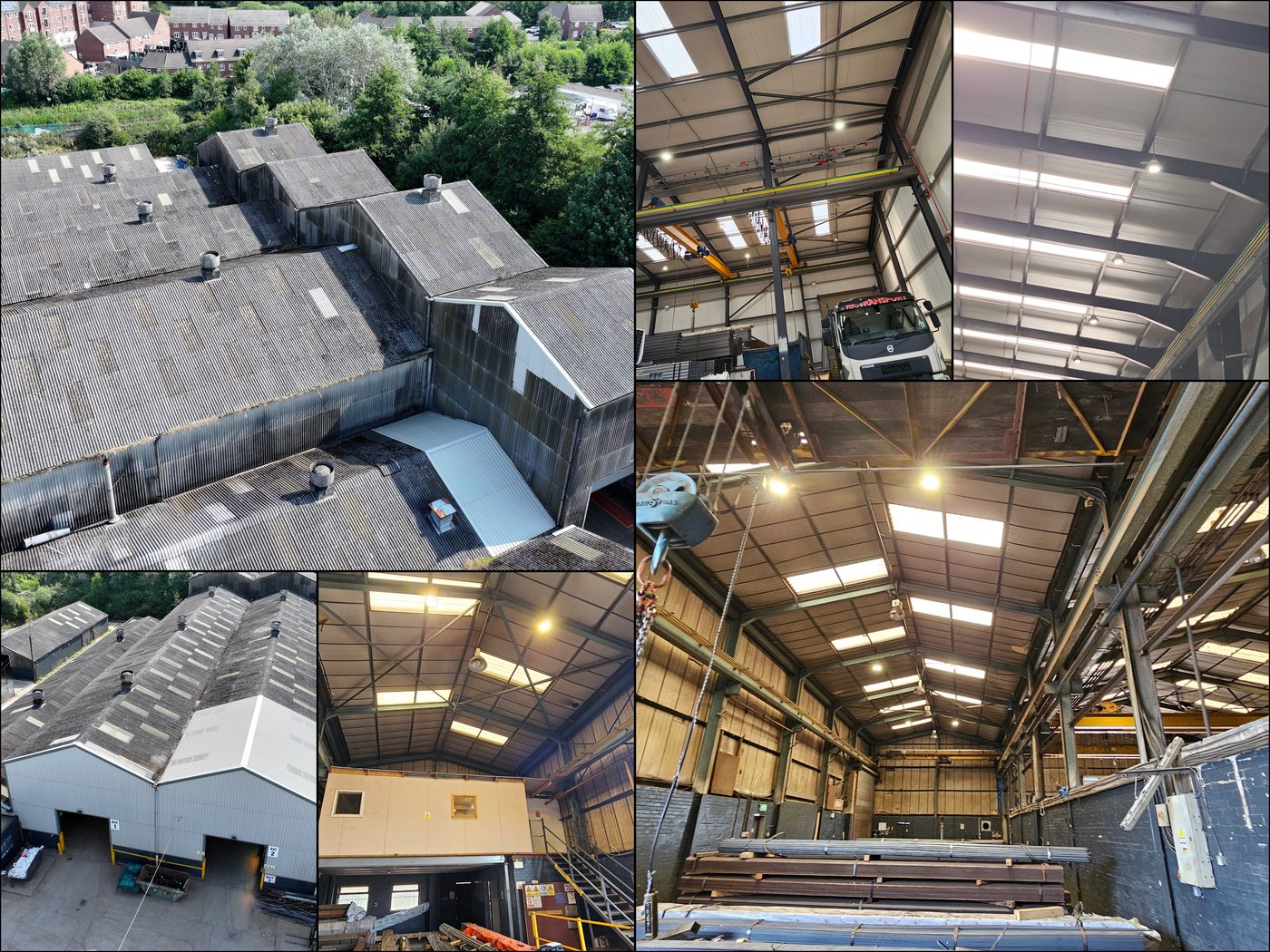
Structural reports and site surveys from Solar Surveys are formatted from the outset to satisfy lender technical advisor requirements without supplementary documentation or reissue at the finance stage. The report includes Engineering Principal signatory, explicit Eurocode calculation references, MCS MIS 3002 Section 5.9 compliance confirmation, installation constraints stated as conditions rather than recommendations, and a clear structural verdict. For ACM roofs and older buildings, the UAV condition assessment co-signed by the structural engineer provides the lender-grade condition evidence that TA reviewers require.
CLIENT PROFILE
A PPA provider's project finance lender raised queries on three structural reports submitted for a portfolio drawdown, the reports had been produced by three different structural engineers using different formats, calculation methodologies, and signatory styles. Solar Surveys was instructed to review and reissue all three reports to a consistent format addressing the TA's specific checklist items. The reissued reports were accepted at the next TA review cycle with no further queries.
Lender Technical Adviser Review: What to Expect
When a commercial solar project is presented to a lender for project financing, the lender appoints a Lender Technical Adviser (LTA) to review the technical package on their behalf. The LTA's structural review is a separate layer of due diligence above the MCS certification process, it is not merely checking that MCS criteria are met, but assessing whether the structural risk associated with the project is adequately managed for a lender who is committing capital to the asset over a 10-20 year financing term.
The LTA's structural review process typically involves:
- Desk review of the structural calculation pack, checking load derivation methodology, section capacity calculation approach, and conclusion against the Eurocode standards cited
- Assessment of the structural engineer's credentials and PI adequacy, confirming professional accreditation, institutional membership, and PI coverage appropriate to the project value
- Site inspection report review (if a site survey was conducted), checking that the site conditions observed are consistent with the assumptions in the calculation
- Fixing adequacy assessment, confirming that fixing pull-out capacity has been verified against actual site conditions, not just assumed from manufacturer data
- Issue of a structural comment schedule, a list of queries or clarifications required from the structural engineer
The comment schedule is a normal part of the LTA process, not a red flag. Every structural assessment reviewed by an LTA will receive comments; the question is whether the comments are substantive (requiring calculation changes) or administrative (minor clarifications or document formatting). A well-prepared structural calculation pack receives administrative comments only; a poorly-prepared pack receives substantive comments that require significant additional work.
Preparing Structural Documentation to Lender Standard
The most common reason commercial solar projects encounter delays in lender due diligence is that the structural documentation was prepared to MCS standard rather than lender standard, and the additional LTA requirements are discovered at financial close. Avoiding this delay requires understanding lender requirements before the structural scope is commissioned, not after.
Key differences between MCS-standard and lender-standard structural documentation:
MCS standard (Section 5.9)
- Written report confirming adequacy
- Signed by competent structural engineer
- Specific to the installation
- PI not explicitly required in document
- No independent check requirement
Lender standard
- Written report plus full calculation pack
- Signed by professional qualification
- PI confirmation letter explicitly required
- Firm-level PI (not just individual)
- Independent calculation check for large projects
- Design basis statement documenting assumptions
- Construction inspection plan included
Refinancing and Lender Due Diligence on Existing Assets
Commercial solar assets financed at construction are typically refinanced after 5-10 years of operation, either through new project debt, green bonds, or portfolio transactions. At each refinancing event, the incoming lender will conduct due diligence including structural review. The structural documentation prepared at original construction must be available, legible, and attributable to a structural engineer whose PI is traceable.
Common structural documentation problems at refinancing:
- Original structural report cannot be located, filed on a system that has since changed or migrated
- PI confirmation letter expired or engineer no longer practising, the insurer backing the original opinion cannot be confirmed
- Report does not cover the as-installed system, design changes made during installation were not updated in the structural assessment
- Report is a summary without calculation pack, insufficient for LTA review without supplementary work
Each of these problems requires remediation work at refinancing, either locating the missing documentation, commissioning a new structural assessment, or obtaining a letter of reliance from the original engineer (if they are still practising). This work costs time and money at the least convenient point in the refinancing timeline. Maintaining the structural documentation pack throughout the operational period, in a system that is accessible at refinancing, eliminates these problems at source.
THE STRUCTURAL TRINITY
Three Reports That Clear a Commercial Solar Site for Installation
READY TO COMMISSION
Get a Quote in 24 Hours.
Structural surveys, Desktop Structural Roof Loading Reports, drone assessments and solar design packages, delivered to a 48-hour benchmark.
Get a Quote