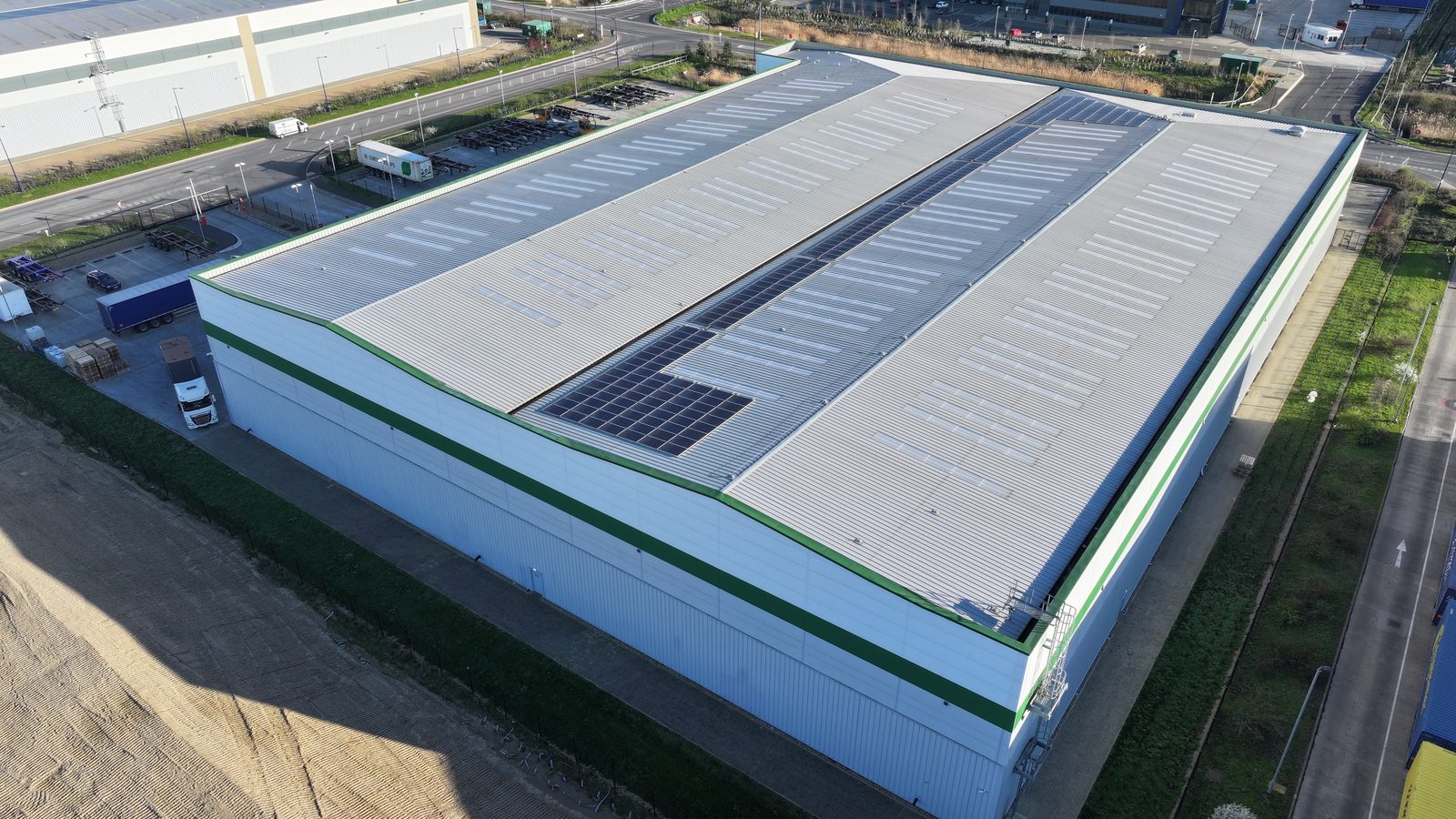
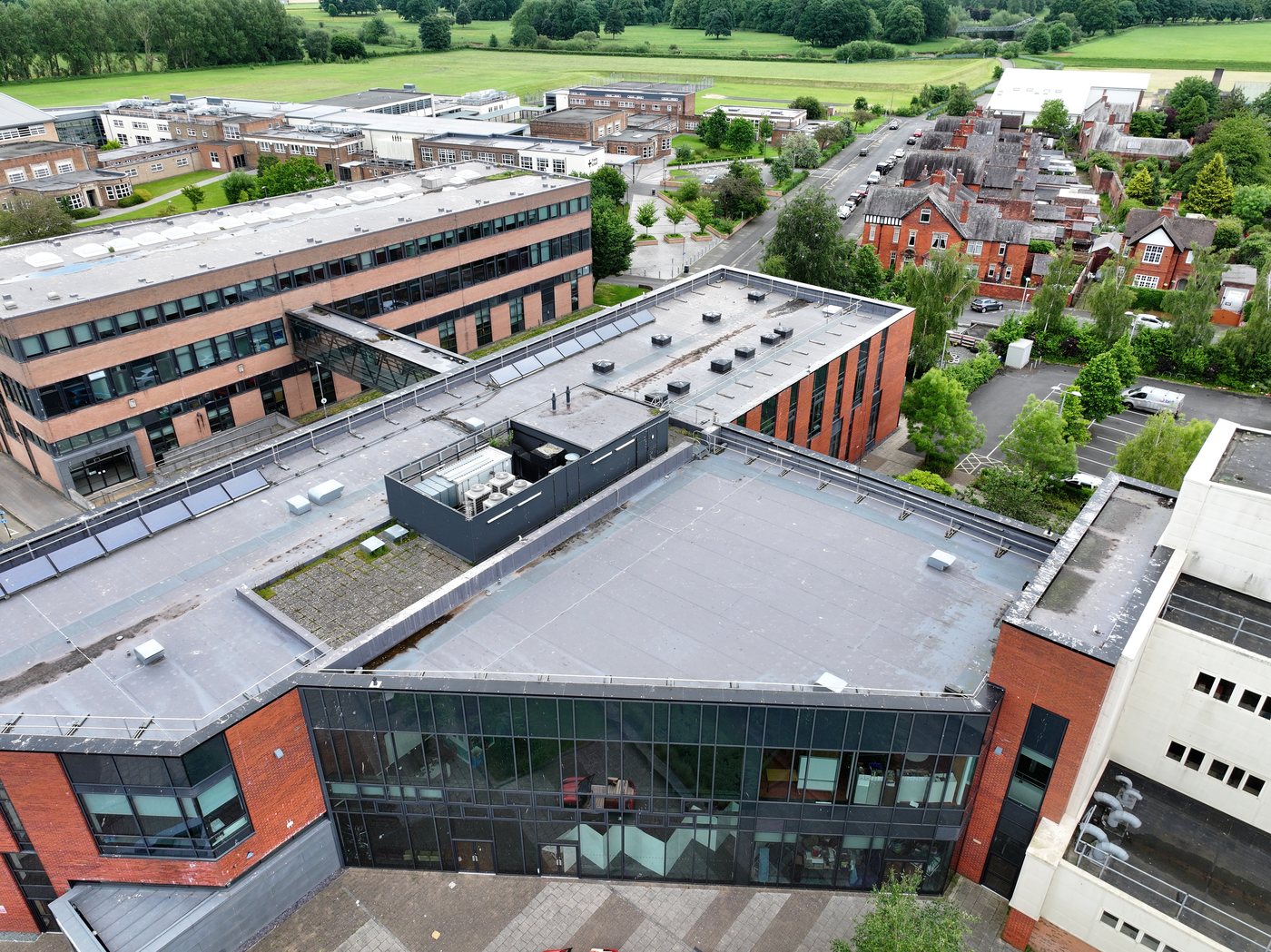
Drone roof surveys have largely displaced walkover inspections for UK commercial property in 2026. The drivers are operational: no scaffold required, no roof access, no working-at-height exposure for inspection staff, and high-resolution overhead imagery covering the full roof in 30 to 60 minutes per building. Walkover inspection retains a niche where physical sampling of materials is required (asbestos confirmation, core samples), but for routine condition assessment and pre-PV feasibility the drone has won.
This guide compares drone-led and walkover inspection across five dimensions: deliverable, cost, safety, speed and accuracy. The conclusion is that drone-led wins on four out of five for routine commercial roof inspection, with walkover retaining edge cases.
Deliverable Comparison
A walkover inspection produces close-quarters photography and a written condition report. The inspector sees the roof from a standing position, often working in pairs for safety, and produces imagery taken from chest height. Coverage is typically partial: large flat roofs, especially with installed PV, are operationally difficult to walk in their entirety.
A drone survey produces high-resolution overhead imagery covering the full roof, an annotated defect schedule keyed to the imagery, drainage performance review, fixings status review, and (where solar PV is installed) a panel condition assessment. The deliverable is engineer-reviewed: the drone is the data-capture instrument, the report is signed by qualified structural engineering staff who interpret the imagery.
Cost Comparison
Drone-led commercial roof inspections are quoted on application as scope varies significantly with roof count, building access and inspection depth. Walkover inspections typically require scaffold or roof-walker hire, which adds material cost and lead time. For routine condition surveys without physical sampling, drone-led is consistently cheaper per building. For portfolio programmes covering 10 sites or more, the cost differential widens further: drone mobilisation can cover several buildings on a single regional visit, where walkover requires per-site scaffold provision.
Safety Comparison
Working-at-height risk is the headline safety case for drone-led inspection. Walkover requires inspection staff on the roof, often near the perimeter for drainage assessment or near skylights and ventilation kerbs. Fall-arrest provision, edge protection, scaffold or roof-walker systems are required. The safety case is manageable but represents an operational hazard the drone-led approach eliminates entirely.
For sites with installed PV, the safety case favours drone even more strongly. Walking between rows of ballasted modules near roof edges is slow and exposes inspection staff to fall risk over a working surface that is itself a hazard (ballast pads, panel frames, wiring runs). Drone capture from outside the roof footprint covers the full array in 30 to 60 minutes with zero working-at-height exposure.
Speed Comparison
Drone capture takes 30 to 60 minutes per typical commercial roof. The total elapsed time from instruction to engineer-signed report is 3 to 5 working days, with engineer review and report production within 48 hours of the site visit. Walkover inspection requires scaffold mobilisation (typically 5 to 10 working days from instruction), site visit (half day to full day per building), and report production. Total elapsed time is 2 to 4 weeks, sometimes longer in saturated periods.
For asset managers running periodic inspections across 30 to 100 commercial PV sites annually, the cumulative time saving of drone-led versus walkover is typically several weeks of inspection lead time across the year. The 48-hour delivery benchmark holds at portfolio scale.
Accuracy Comparison and the Edge Cases for Walkover
Drone capture at 10cm to 50cm per pixel resolution produces imagery that exceeds what a walkover inspector can document with hand-held photography in most contexts. For surface condition, fixings status, drainage performance, panel condition and ballast position, drone imagery provides higher information density.
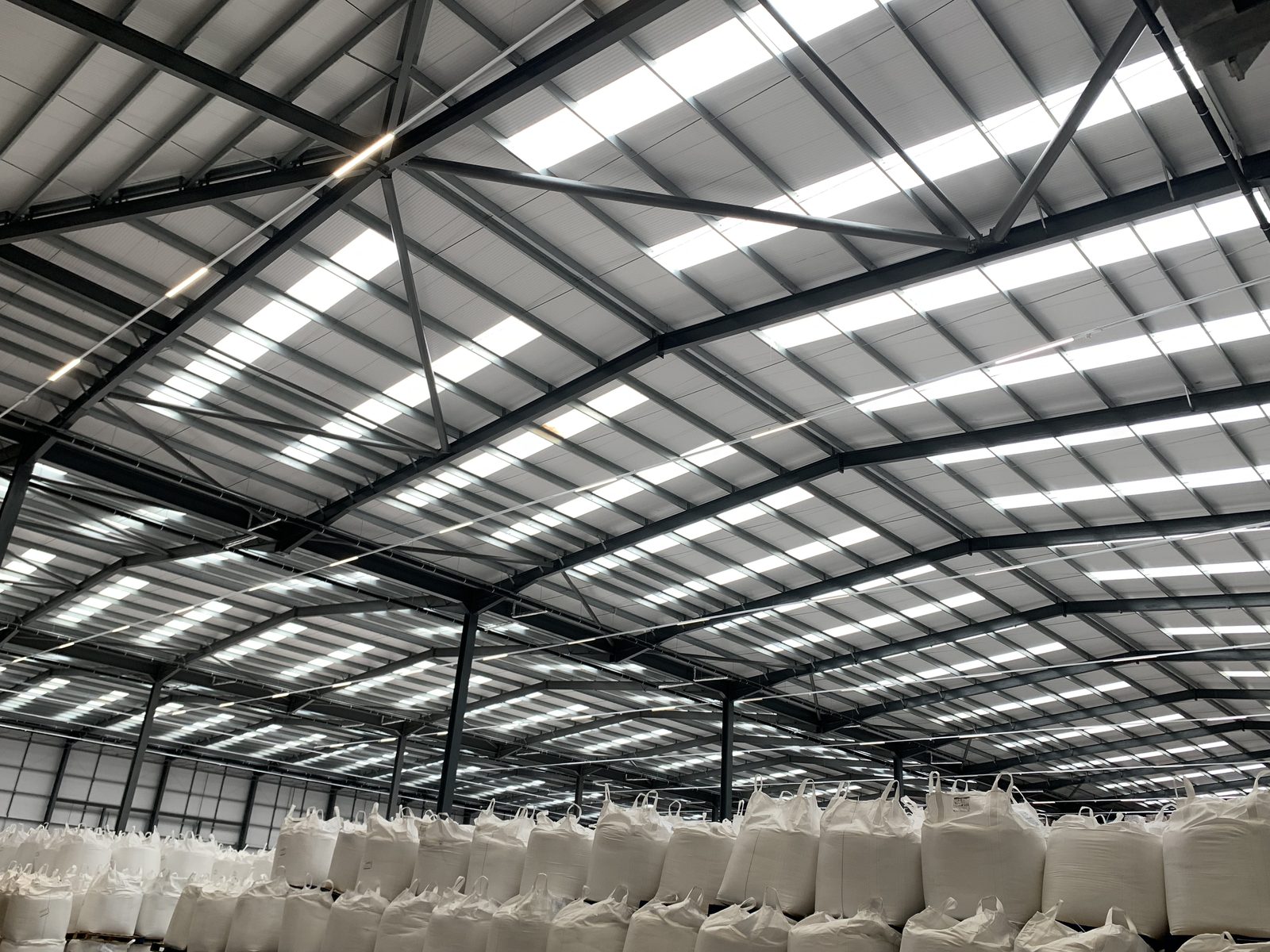
Walkover retains advantage in three specific edge cases: when physical sampling is required (asbestos cement confirmation per CAR 2012, core samples for substrate assessment), when internal soffit or rooflight inspection is part of the scope (drone can read external surface only), or when working-at-height-clearance access is already mobilised on site for an unrelated reason and adding inspection scope is operationally cheap. For pre-PV feasibility surveys, the structural engineer's internal inspection of the building (purlins, rafters, ridge beams) is conducted from inside the building, with drone capturing the external roof in the same visit. This is the combined survey-plus-drone product priced on application.
Where Solar Surveys Helps
For drone-led roof survey see drone roof survey. For commercial roof inspection (drone-led with engineer review) see commercial roof inspection. For combined drone-plus-structural for pre-PV work see structural surveys. For the cross-product roof survey hub see roof survey. To commission a survey see contact.
THE STRUCTURAL TRINITY
Three Reports That Clear a Commercial Solar Site for Installation
READY TO COMMISSION
Get a Quote in 24 Hours.
Structural surveys, Desktop Structural Roof Loading Reports, drone assessments and solar design packages, delivered to a 48-hour benchmark.
Get a Quote